Most of the important work I have seen in my life did not happen in a document. It happened in the space between people.
When we started building what would become Miro, we were a small team with a practical problem. The people we worked with were not in the same room, and the tools we had made collaboration feel like passing notes through a slot in the door. One person wrote, another reviewed, a third approved. We just wanted a place where everyone could see the same thing at the same time.
That idea turned out to be bigger than we expected. I have watched millions of teams do something I still find remarkable. They put a messy problem on a canvas, argue with it, move it around, and slowly turn it into something no single person could have produced alone. The canvas never does the work. It only makes the work visible, and visible work changes how people behave. This book is about why that matters more now than ever.
The authors describe something I recognize from leaders everywhere. Organizations are not short of talent, ideas or energy. They are held back by how work is designed to move: from function to function, each handoff dropping a little more context. Then AI arrives with the hope that it will fix everything. It won't, not on its own. As this book puts it, faster individuals feeding a slow system do not make a fast organization. They make a bigger queue.
I agree, and I say it as someone who builds AI into a product used by teams around the world. AI is extraordinary at generating, clustering, summarizing and drafting. But it has no judgment about which problem is worth solving, and no stake in whether a team agrees. The real opportunity isn't AI replacing collaboration. It's AI joining it, inside the shared context where people already think together. That's what "augmented collaboration" means to me: people and AI working in the same space, on the same problem, and seeing the same picture.
What convinced me most is not the argument but how the book was made. Patrick and his co-authors could have written it behind closed doors and revealed it when finished. Instead they invited more than 250 people from over 50 countries onto a single shared board. For months, contributors across every time zone met weekly, challenged assumptions, voted and built on each other's thinking. Then the authors did something few would dare: they printed an unfinished version, called it the #badversion, and asked for honest criticism.
That is the operating model this book describes, carried out in the open on the book itself. Ideas advanced on merit rather than seniority. Feedback came early, when it was still cheap to act on. I have seen many teams collaborate on Miro, but rarely one that practises so completely what it preaches.
Patrick has done this before: Business Model Generation showed a book could be co-created by a global community and become a tool people use, not just read. This book takes that spirit into a new era, where your collaborators include not just colleagues and customers but intelligent systems that help you think.
My advice is simple: don't just read this book, use it. Put the canvases on the wall or on a board. Bring your team. Try one principle on Monday and see what happens. The ideas here are not theory; they were tested by hundreds of practitioners before they reached you.
The future of work won't be decided by who has the best AI. It will be decided by who builds the best system around it, one where people and machines create value together, in the open, and faster than the world can change around them.
This book is a very good place to start.
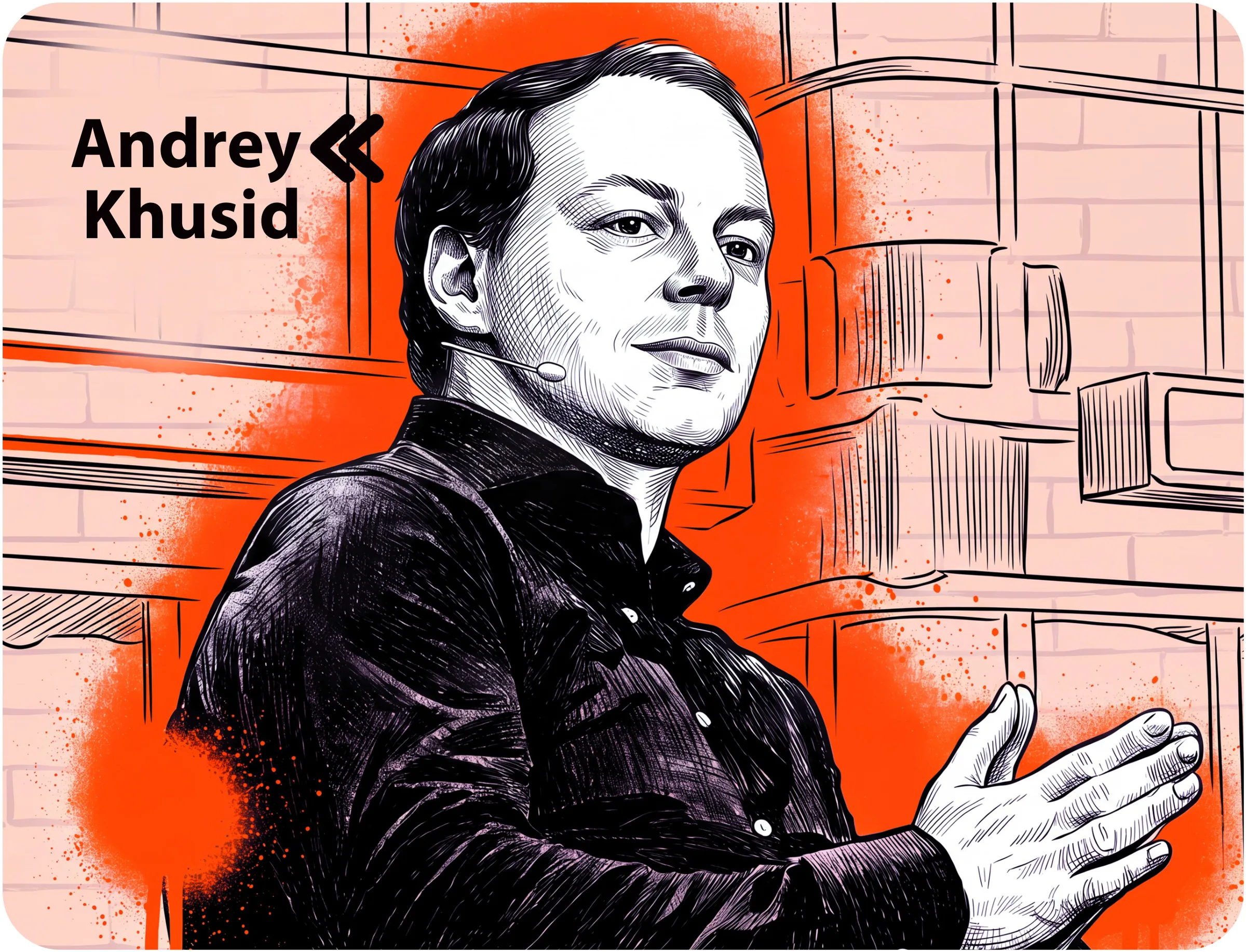
Andrey Khusid Founder and CEO, Miro