Ways of working as an Operating System.
An organisation's real advantage lies less in the ideas it can produce than in whether its ways of working let those ideas travel across people, tools and time without losing their meaning.
Most organisations do not struggle for talent or for effort. What they struggle with is keeping work connected as it moves across people, tools and phases, so that what one team understands does not quietly dissolve before another team can act on it. Insights are found and then never translated into action. A carefully framed problem loses its edge in a handover. Execution drifts, slowly, from the intent that first set it in motion. None of this comes from a shortage of intelligence. It comes from the absence of something that holds the work together as it evolves. That something is what we call a Collaborative Operating System. It is built less from software than from the way people actually work together, and it is what allows an organisation to move as one rather than as a collection of well meaning parts.
A Collaborative Operating System in practice
A Collaborative Operating System is not a piece of software, and it cannot simply be bought or installed. It is the way work is held together as it moves across people, tools and time. Software can support it and even make it possible at scale, but the system itself lives in how teams see, share and connect what they are doing. And in a world where that work is increasingly continuous, distributed and augmented by AI, one requirement rises above all the others. The work has to be visible.
This is the point where visual, real time collaboration stops being a convenience and becomes the foundation. A shared canvas gives a team a single place to think together, where the state of the work is always in view rather than locked away inside documents, inboxes and individual heads. Platforms such as Miro make that possible at scale. A shared canvas is not a stage for presenting finished work. It is the environment where the work happens. It is where customer problems are mapped and kept in sight, where workflows are drawn out so everyone can see how value actually moves, where trade offs are argued over in the open, and where hypotheses are written down, tested and revised rather than carried silently in someone's head. On a shared canvas the early exploration becomes visible, the framing of a problem becomes traceable, and delivery becomes something a team can measure rather than assume.
What changes when work becomes visible is not cosmetic, it is structural. Decisions that once waited on a meeting can be made in the flow of the work, because the context everyone needs is already on the canvas. Dependencies that used to stay implied become explicit, so fewer things are discovered too late and at too high a cost. Metrics stay tied to the problem they came from rather than floating free in a separate report that no one quite trusts. The distance between understanding something and acting on it shrinks, and with it the decision latency, the political interpretation and the rework that quietly consume so much of an organisation's energy. Teams do not move faster because they are working harder. They move faster because less is lost in translation between intention and activity, and because the same shared picture keeps everyone honest about where the work really stands.
A system like this earns its name through the connections it keeps intact while the work moves. It ties strategy to execution, so the plan and the doing do not drift into separate worlds. It turns reporting into operating, so the record of the work and the work itself become one thing rather than two versions maintained in parallel. It links data to decisions, individuals to teams, and the customer problem at the start to the value delivered at the end. These are not technical integrations bolted on afterwards. They are structural guarantees, the joints that stop the work from coming apart under pressure.
Where AI fits
AI has only raised the stakes of getting this right. On its own, AI makes individuals more productive, but productivity without alignment does not add up to progress. It can just as easily multiply the number of directions a team is pulled in, as ten people each generate ten plausible readings of the same ambiguous situation. What an organisation needs from AI is not simply more output. It is better integration, a form of collective intelligence that works inside the shared context rather than beside it. Placed on the canvas, AI can help sense the patterns emerging as information arrives, sharpen the way a problem is framed, and support the work as it is carried out. Used in isolation it amplifies divergence. Used inside a visible and connected system, it amplifies clarity. That difference is the whole argument, and it is why the Operating System matters more, not less, once AI is in the room.
A way of working built on people
Miro is worth looking at twice here, because it is not only a platform that can enable this kind of system. It has also built an internal way of working that closely mirrors the role a Collaborative Operating System is meant to play, which makes it a useful place to watch the idea work in practice rather than in theory.
Dominik Katz, the Ways of Working Lead at Miro, puts one principle at the centre of all of it. Meaningful organisational change begins with the people inside the system, and tooling only ever plays a supporting role. A platform can make good work easier, but it cannot decide that the work should change, and it cannot carry people through the discomfort of changing how they operate. Without genuine enablement and change management, even the most advanced tools become little more than expensive furniture, admired, underused and quietly resented. For that reason he argues that ways of working initiatives should follow an eighty twenty split, where roughly eighty percent of the effort goes into the human factor and only twenty percent into tooling and infrastructure.
He is just as clear that ways of working should never be treated as abstract frameworks handed down to teams from above. They are far better understood as responses to real human challenges inside the organisation. When the human factor becomes the starting point, the people doing the work are treated as the primary users, the internal customers of the system. That reframing matters more than it first appears, because most of the frictions, bottlenecks and inefficiencies an organisation sets out to solve have already been named, in plain language, by the people closest to the work. And in many cases the solution already exists somewhere inside the organisation. Some team has quietly worked out a better way. It has simply never been noticed, written down, shared or scaled.
This is why ways of working can be approached in the same way as a product. The process starts with the internal customer, with understanding their felt pain and the real problems they meet in their daily work rather than the problems a framework assumes they have. From there the task is to trace the root causes beneath the visible symptoms, and to look for the bright spots, the teams who have already found practices that work. Those examples become the raw material for small, safe-to-fail experiments run with real teams on real work, where an approach can be tested, refined through feedback and observed behaviour, and scaled only once it has earned its place. It is discovery, turned in on the organisation itself, and it treats a way of working as something a company learns its way into rather than something it announces.
Four designs that hold it together
Out of this way of thinking, four designs stand out, four ways of shaping how work actually happens. Each one supports the Collaborative Operating System in its own way, and underneath all four runs one method: try something small, see what it teaches, and adjust. They are design for flow, design for learning, design for collaboration and design for agency.
The first is design for flow. It is concerned with how work moves, and with removing whatever slows the journey from understanding something to acting on it. When work is designed for flow, momentum comes from the work itself rather than from the meetings that surround it, and a team can sense, respond and adjust in a continuous rhythm instead of waiting for the next scheduled moment to move.
The second is design for learning. It treats every piece of work as a chance to get better, and it depends on keeping the work open and improvable rather than hidden away until it looks finished. When a system is designed for learning, knowledge does not sit trapped in one corner of the organisation, and the distance between making something, seeing how it lands and improving it grows shorter with every cycle.
The third is design for collaboration. It starts from the fact that the customer never experiences the org chart, so the work has to cross the internal lines that would otherwise slow it down. When a system is designed for collaboration, strategy and delivery become things people build together rather than pass between them, and both human and AI contributors work as part of the same team on the same shared context.
The fourth is design for agency. It keeps people at the centre even as more of the work is augmented, so that technology widens what people are able to think and do rather than quietly taking decisions away from them. When a system is designed for agency, the tools serve the judgement of the people using them, and the shared context is rich and reliable enough that everyone, and every AI, is working from the same picture of what is true.
None of this is offered as a complete or universal model, and complexity theory explains why none can exist. Best practices only ever emerge in complicated environments, where problems are hard but knowable and the right expertise can find an answer that repeats. The current period is not that. It is complex: cause and effect show themselves only in hindsight, no expert can model the whole in advance, and the only honest way to act is to probe first, sense what happens, and respond. What we argue in 'Augmented Collaboration' fits that guidance deliberately. The invitation is not to adopt these designs wholesale, or to overhaul your operating model in one announced transformation, but to start small inside your own context, observe what resonates, and scale the practices that prove themselves. That is not a compromise. In a complex world, it is the method.
Design for flow.
The loop is the unit of progress.
Design for flow starts from a simple observation about the world the earlier chapters described: the ground keeps shifting while you work. The old sequence, think, decide, execute, assumed you could think first, in full, and then act on a finished plan. That assumption no longer holds, and flow replaces the sequence with a continuous loop: discover, define, deliver. The loop treats every action as a way of learning something, and everything learned as a reason to adjust, so the work sharpens as it moves rather than waiting for a review at the end. Instead of separating thinking from doing and handing them to different people at different times, flow fuses them into a single ongoing motion.
The most visible form of talking-around-the-work is the meeting habit. Insight gets a meeting. A decision gets a meeting. Even execution gets a status meeting to confirm that the execution is happening, until the calendar becomes the real operating system and the work squeezes into the gaps between conversations about it. Flow refuses to treat the meeting as the basic unit of progress and puts something more honest in its place, the workflow. Meetings are where value gets discussed. Workflows are where it gets made. The distinction changes what an organisation rewards: when the meeting is the unit, people are rewarded for showing up well prepared to talk; when the workflow is the unit, they are rewarded for moving the work.
But the loop is only half of this design. The other half is what it turns your attention to: everything in the organisation that stops the loop from turning. Most of the delay in an organisation does not come from the work itself. It comes from the spaces between the work, the handovers, the approvals, the waiting for the right person to be free. Every one of those gaps is a place where context leaks out and momentum drops. Design for flow treats those gaps as the real problem to solve. It asks, at every step, whether a handover is genuinely needed or simply habit, and it keeps shortening the distance between noticing something and acting on it until the two almost touch.
Underneath all of it sits one incentive: bring people closer to the actual work. Every organisation splits its energy between doing work and talking around it, the reports that describe the work, the decks that summarise the work, the alignment sessions about the work. Every hour spent describing the state of the work is an hour not spent changing it, and the describing has a way of growing until it crowds out the doing. Flow's measure of health is that ratio: how much of a team's week happens where the work happens, and how much at one remove, in rooms and documents that are about the work rather than of it.
AI quickens the whole loop, sensing patterns as information arrives and generating options in real time, so a team spends less of its energy gathering and more of it deciding. But a loop that senses and makes at machine speed and then waits three weeks for an approval is still a three-week loop. The faster the work moves, the more expensive every stop becomes.
Three ideas sit inside this design:
- The Loop, a continuous rhythm of discover, define and deliver that replaces the old linear sequence
- The Workflow, the place where value gets made rather than talked about, replacing the meeting as the unit of progress
- Reduce the distance between insight and action, cutting out every handover, approval and wait that slows things down
The goal is not speed for its own sake. The goal is to remove the drag that builds up every time work has to stop moving so it can be discussed, approved or handed off. When that drag is gone, the organisation does not just move faster. It stays closer to reality, because the loop keeps pulling it back to what is actually happening rather than to what was decided weeks ago.
The workflow.
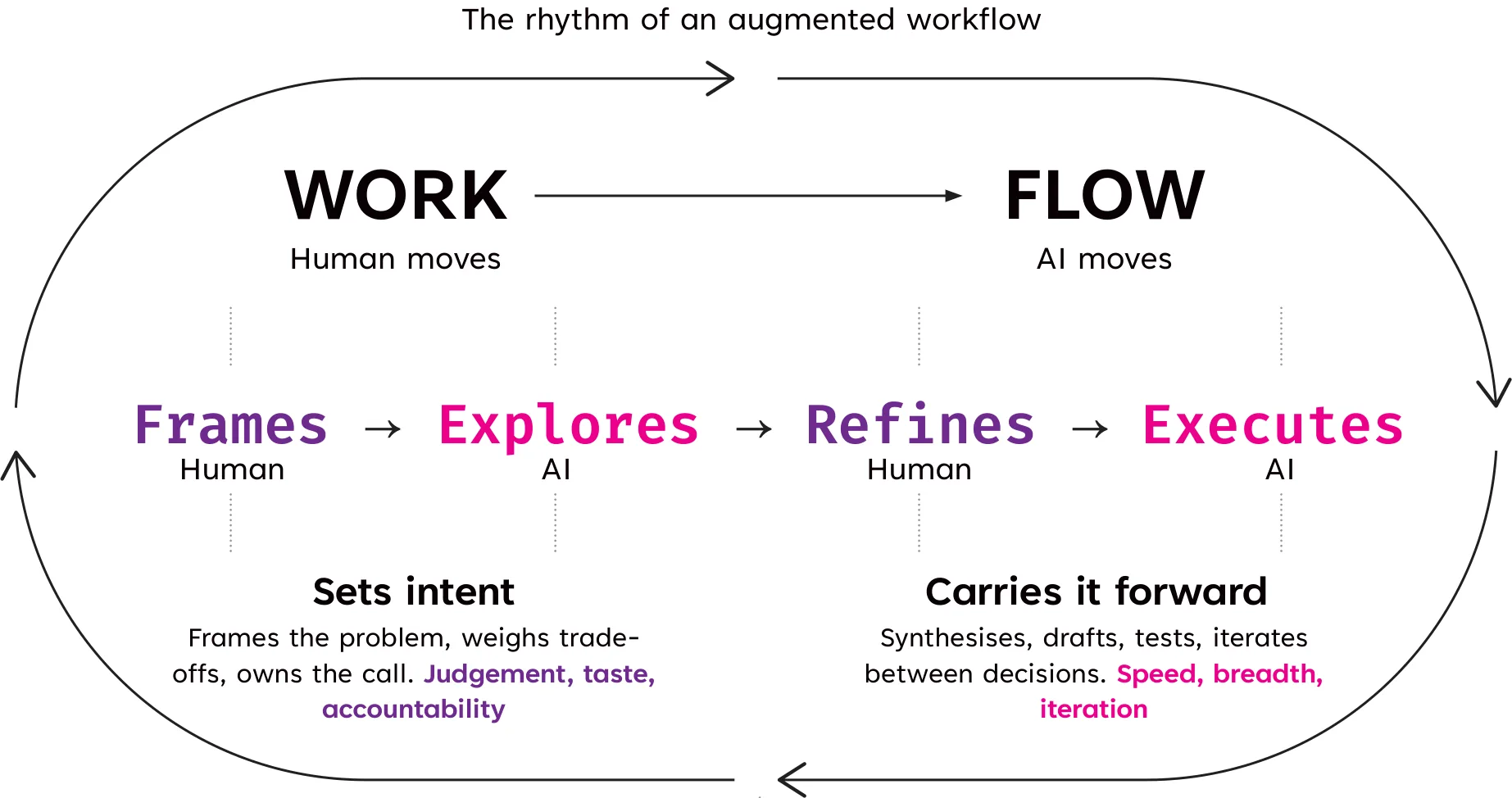
A workflow is not a single act. It is a sequence of moves, and in an augmented system those moves alternate between two distinct kinds of intelligence. Humans bring judgment, taste, context, and accountability. AI brings speed, pattern recognition, breadth, and tireless iteration. Neither replaces the other. Each is weakest where the other is strongest. Together, they form a rhythm.
We call this rhythm Work Flow, and it matters which half belongs to whom. The Work, the raw producing, is increasingly what AI takes on and accelerates: writing, coding, generating, synthesising inputs, drafting options, stress-testing assumptions, translating between formats, preparing the ground for the next decision. This is the production load that used to consume a team's days, and it is exactly the load machines carry best. The Flow belongs to people. It is the human experience of the work: framing the problem, deciding what matters, connecting ideas to each other and people to each other, weighing trade-offs, choosing direction, and standing behind an outcome. Flow is where conviction lives, where taste operates, and where someone is willing to put their name against a call. That is why this chapter is called Design for Flow and not Design for Output: the point of the whole design is the human experience of judging, connecting, and deciding, with the producing accelerated around it. An organisation that gets this backwards, optimising the machine's experience while people service it, has automated itself into the wrong rhythm.
When you map a workflow on the canvas, the rhythm becomes visible. A human frames the question. AI produces the exploration. A human judges, connects, and decides. AI produces the next round. But that is not a relay to memorise: it is a rhythm of compounding cycles, human, AI, human, AI, whose exact shape changes with the problem. Skip the human moves, and the workflow drifts toward outputs no one truly owns and no one quite trusts. Skip the AI moves, and the workflow slows back to the pace of memory, meetings, and manual effort. Keep the rhythm honest, and the system starts to compound: each cycle is sharper than the last, because both kinds of intelligence keep doing what they do best, in the moment they do it best.
What makes the rhythm powerful is that the handovers shrink. The lag between a human deciding and AI delivering, between AI producing and a human judging, collapses from days to minutes. Decisions stay in flow. Context does not get lost in translation.
None of this works without one precondition: a shared workspace. Real-time interaction between humans and AI is only possible when both are working in the same place, on the same visible material, where every contribution can be seen, built on, and challenged as it lands, and where the cycles get captured so learning compounds instead of evaporating between sessions. The work begins to feel less like a relay race and more like a conversation that never has to pause.
This is the practical shape of augmented collaboration: a designed rhythm in which each intelligence plays its strongest move at the right moment. Work produces. Flow decides. Work carries the decision forward. Flow questions the result. And when teams learn to see their work this way, the question stops being who does what, or what the right order of things is. The question that remains is the only one that ever mattered: what outcome do we want, and what is the way to get there? The rhythm forms around the answer.
Order of things.
The cycle repeats: Each pass sharper than the last
The loop.
Most companies still operate innovation like a construction project. The sequence is familiar and reassuring:
Idea → Plan → Build → Launch → Done.
It feels clean and controllable. It fits governance models, budgeting cycles, and reporting structures. Once something is launched, the team celebrates, documents lessons learned, and moves on to the next initiative.
But this model assumes that markets behave predictably. It assumes that once you define the idea correctly and execute the plan well, success will follow. In stable environments, that logic once worked. In today's markets, it rarely does.
Real innovation does not move in a straight line. It behaves more like this:
Discover → Define → Deliver ↺
Discovery reveals new information about the customer and the problem. Definition sharpens focus and priorities. Delivery creates something tangible to test. And the arrow back to Discover carries the learning: feedback exposes flawed assumptions, unexpected behaviors, or overlooked opportunities, and the team enters the next cycle with greater clarity.
This is not backtracking. It is progress.
The loop replaces false certainty with structured learning. Each cycle reduces uncertainty. Each repetition increases alignment between problem, customer, value, and monetization. In a linear culture, returning to Discover feels like an admission that the team got it wrong, which is why linear organizations resist it and ride a flawed plan all the way to launch. In a loop, returning is the mechanism: every pass costs less than the one before, because the team already knows where to look, and teaches more, because the questions have sharpened. Over time, the solution becomes sharper, not because it was perfectly designed at the start, but because it was continuously improved, and the improvement compounds with every turn.
The sequence is fluid.
The phases matter more than their order. Which one you enter first depends on the situation: sense first when things are stable enough to study, and the customer is reachable, the data exists, the interviews will teach you something real. Build first when the only way to learn is to try it, because the question is so new that no amount of research would answer it. A team might land in Define with a prototype before it has finished discovering, or ship a rough Deliver precisely to force the discovery that talking could not produce. The practices inside each phase stay the same. The entry point moves. The loop's power is not its order. It is its repetition.
Importantly, the loop is not chaos.
It is not random experimentation or endless pivoting. It is structured repetition. Each cycle begins with a hypothesis and ends with evidence. Each refinement is based on insight, not opinion. Governance still exists, but it evaluates learning instead of checking milestone completion.
The linear model asks, "Did we execute the plan?" The loop asks, "Did we improve our understanding?"
In dynamic markets, the second question is the only one that matters.
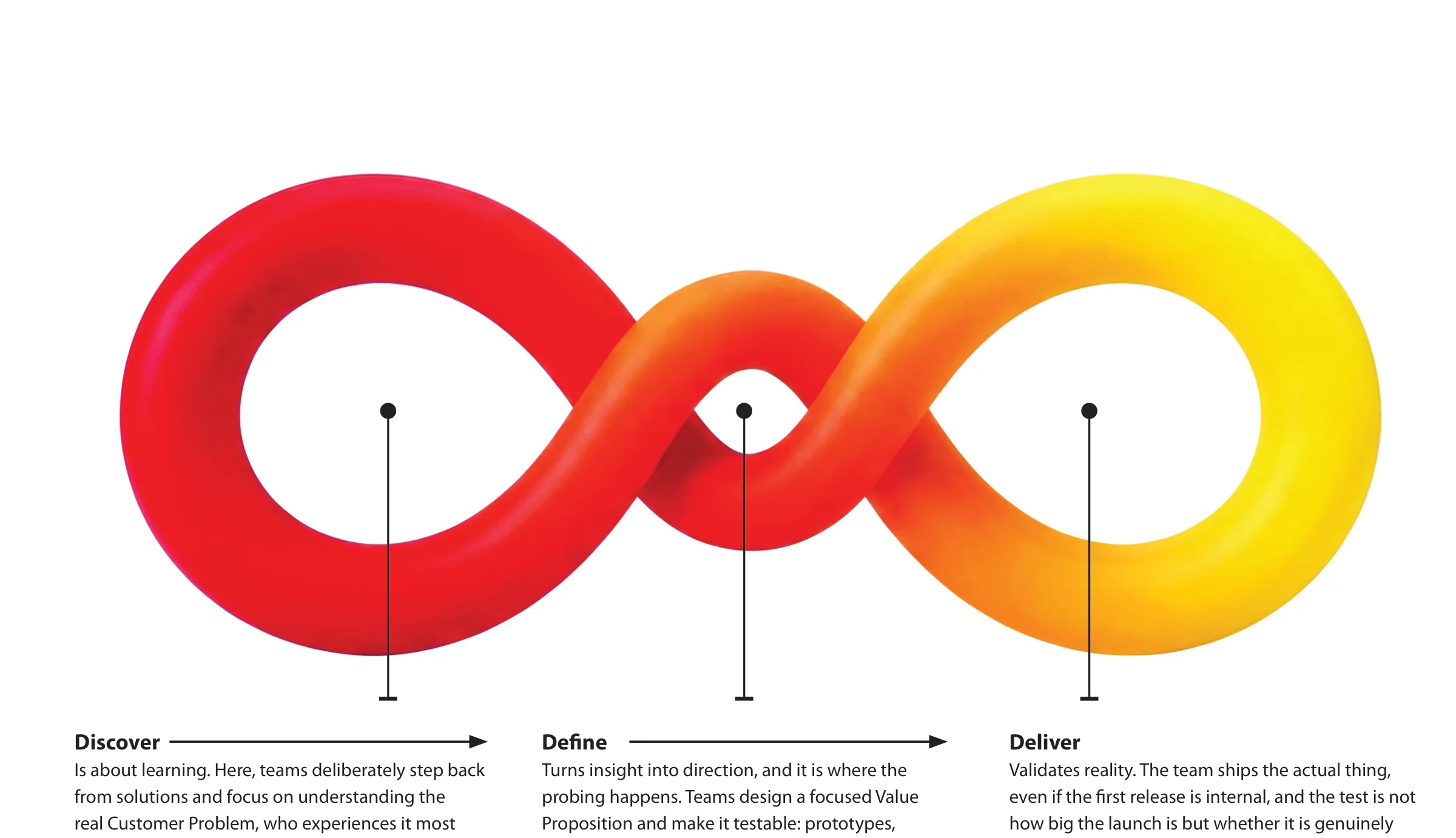
Is about learning. Here, teams deliberately step back from solutions and focus on understanding the real Customer Problem, who experiences it most intensely, and under what conditions it emerges. Through interviews, observation, competitor research, data exploration, and AI-assisted analysis, assumptions are surfaced and tested. The outcome is not a list of ideas, but a validated problem statement, a clearly defined target customer, and prioritized pains. Leaders protect exploration time and resist the urge to jump to answers.
Turns insight into direction, and it is where the probing happens. Teams design a focused Value Proposition and make it testable: prototypes, usability sessions, and concept tests against real reactions rather than opinions. Weak features are eliminated. Trade-offs are made. Learning becomes commitment.
Validates reality. The team ships the actual thing, even if the first release is internal, and the test is not how big the launch is but whether it is genuinely used as real work. The result is traction insight and a clear decision to scale, refine, or pivot. Deliver is not launch. It is disciplined adaptation.
Reduce distance insights and action.
Imagine a team discovering something important about its customers. Weeks of interviews, patterns emerging, a struggle nobody inside had fully understood. The team has an insight. But instead of acting, they prepare the report: interviews transcribed, findings coded, slides polished, reviews, more data, a stronger executive summary. Three weeks later it reaches strategy, which likes it but wants commercial implications: a business case, finance, a steering committee, eventually a decision that it might be worth exploring. Now it needs to become something, perhaps a prototype, so the team contacts IT; the request enters the backlog queue. Marketing wants the positioning, product wants requirements, legal reviews the proposition. Everyone is doing exactly what their function is designed to do. Three months have passed. The insight is still there, somewhere, but the energy around it is gone.
The distance matters because an insight has a half-life. The longer it waits to become action, the more context disappears, urgency fades, assumptions harden and competitors move. The customer who generated it may have changed; the team may have moved on. The real question for any organisation is therefore simple: how quickly can it move from "we know something" to "something changes because of it"?
For decades, organizations accepted a long distance because creating things was expensive. Research took weeks, prototypes required specialists, and producing something before you were certain carried real cost and risk. So processes were built around that reality: first understand, then analyze, then align, then approve, then build. AI changes the economics of that sequence. The first version of the analysis can now happen in minutes: an AI can synthesize hundreds of interviews, identify patterns, generate hypotheses, and turn an idea into something people can react to. The cost of moving from insight to something tangible has collapsed. Insight to hypothesis to prototype to customer to learning: not months but hours or days. This is not recklessness; the goal is to move thinking closer to action, not eliminate it.
Take the same insight again. Instead of a twenty-page report, the team asks AI to structure the evidence, challenge the assumptions and draft three possible solutions. They pick one, build a rough prototype that afternoon, and put it in front of a customer the next morning. Now the organization has evidence. The customer reacts, the team learns, the prototype changes, another customer tests it. The question is no longer how to improve the report before the handover but how quickly what we know can become something to learn from.
Shrinking the distance is not one intervention but several, each aimed at a place where distance typically accumulates.
Put insights directly in the workflow. Insight that travels through reports and review meetings arrives late and diluted; insight that lands in the workflow of the team responsible arrives while it can still change something. Customer insight, quarterly report, management meeting, decision, implementation becomes customer insight updating the responsible team's workflow directly. Sales reports, monthly review, decision becomes sales data triggering the salesperson to act.
Employee survey, HR report, leadership discussion, action plan becomes feedback the team sees, an action it agrees, an owner assigned. A customer repeatedly abandons the online kitchen configurator at the same step. Instead of waiting for the monthly report, the product team sees the signal in its daily workflow and tests a change that week.
Give decision rights to the people closest to the insight. The longest route runs customer to frontline employee to manager to department head to steering committee. The short route is customer to empowered team to action. A customer-service employee discovers that thirty percent of complaints come from one confusing process; rather than escalating through three management layers, the team changes the process within predefined boundaries. Few moves reduce organisational distance more.
Turn insights into experiments immediately. The instinctive question, "what should we do about this?", opens a discussion. The better question, "what is the smallest experiment we can run this week to learn whether this is true?", opens a test. Customers do not understand the value proposition becomes a hypothesis, two versions in front of a hundred customers, a winner, a rollout. The insight never disappears into a deck.
Connect data to triggers. Dashboards wait to be interpreted; triggers act. Inventory falling below threshold traditionally means dashboard, meeting, discussion, decision, purchase order. Connected to a trigger it means threshold breached, notification, recommendation, approval, order. The distance between signal and action becomes minutes instead of weeks.
Put AI between sensing and doing. Ten thousand customer interactions arrive; AI detects that customers in one segment increasingly ask about delivery certainty, estimates that the uncertainty is costing nearly a fifth of lost conversions, and proposes a test: show guaranteed delivery dates earlier in the journey. The human team decides, and the experiment launches. The shift is that AI is not producing another insight report; it is turning insight into actionable work.
Replace presentations with decision objects. The pattern of analysis, slides, presentation, discussion, follow-up meeting can be replaced by one simple object: the insight, what we learned; the implication, why it matters; the decision, what changes; the owner, who acts; the experiment, what we will do; the measure, how we will know. That turns an insight into something operational instead of something presented.
Measure insight-to-action time. What gets measured moves, so make the distance itself a number. Insight identified Monday morning, decision by Monday afternoon, experiment launched Tuesday, result Friday: an insight-to-action time of days. Ask every team how to reduce theirs from twenty-four days toward twenty-four hours, and a very different management conversation begins.
Run these together and the same insight from the opening story travels a different road: surfaced in the workflow, decided by the team that found it, tested within the week, measured by Friday. If AI can generate ten ideas in the time one used to take, those ten cannot go through the old pipeline. The advantage belongs to those who make the distance small, not because their ideas are better but because they learn what works faster. That is what innovation is: not the production of ideas, but the speed at which ideas encounter reality. The competitive advantage is not having better insights; it is having a shorter distance between sensing something and changing something. Reduce the distance between insight and action, and you reduce the distance between imagination and customer value.
Design for learning.
Learning runs in two directions.
Design for learning treats learning as the engine of quality, and it has to run in two directions at once: inward, from the organisation's own use of its own work, and outward, from the customers the work is for. Most organisations design for neither. Internally, work is polished before anyone is allowed to see it. Externally, customers are met mainly at launch, after the expensive decisions are made. This design opens both channels, on purpose.
Internal learning: make unfinished work visible.
Almost every organisation keeps drafts out of sight until they look finished. The instinct is understandable. But the longer work stays out of sight, the more expensive its mistakes become, because they get built upon before anyone can catch them. Three practices turn the instinct on its head. Open by default makes access the starting condition rather than a favour, so knowledge does not have to be hunted down and fewer teams solve the same problem in parallel. The #badversion shares work deliberately while it is still rough, so feedback shapes it early, when change is cheap; the name is deliberately unglamorous, a reminder that the aim is not to look good but to get better. And dogfooding means using your own tools, workflows and AI systems before asking anyone else to: a team that lives inside what it builds feels the friction its customers feel, and learns the truth sooner than any report could tell it.
External learning: let the customer correct you.
Learning that only circulates internally converges on the organisation's own taste, and work that survives internal feedback can still miss the people it was built for. Feedforward pulls customer signal into the work while it is still being shaped, so real reactions steer the next iteration instead of grading the finished one. And the UX research library keeps every study, interview and test in one shared, searchable place, so customer learning compounds across teams instead of being bought again, project by project.
Five practices sit inside this design, in two directions:
- Open by default, access as a starting condition, not a favour
- #badversion, visible unfinished work beats hidden perfect-looking work
- Dogfooding, use what you build before anyone else does
- Feedforward, customer signal while the work is still in motion
- The UX research library, customer learning captured once, compounding for everyone
Underneath it all is a single bet about where quality comes from: not from refining in private until the work is good enough to show, but from sharing, from the friction of real feedback and real use, first inside your own organisation and then from the customer. Hidden work can only be corrected by the person who made it. Visible work belongs to everyone who can improve it, and that is exactly why it does.
Open by default.
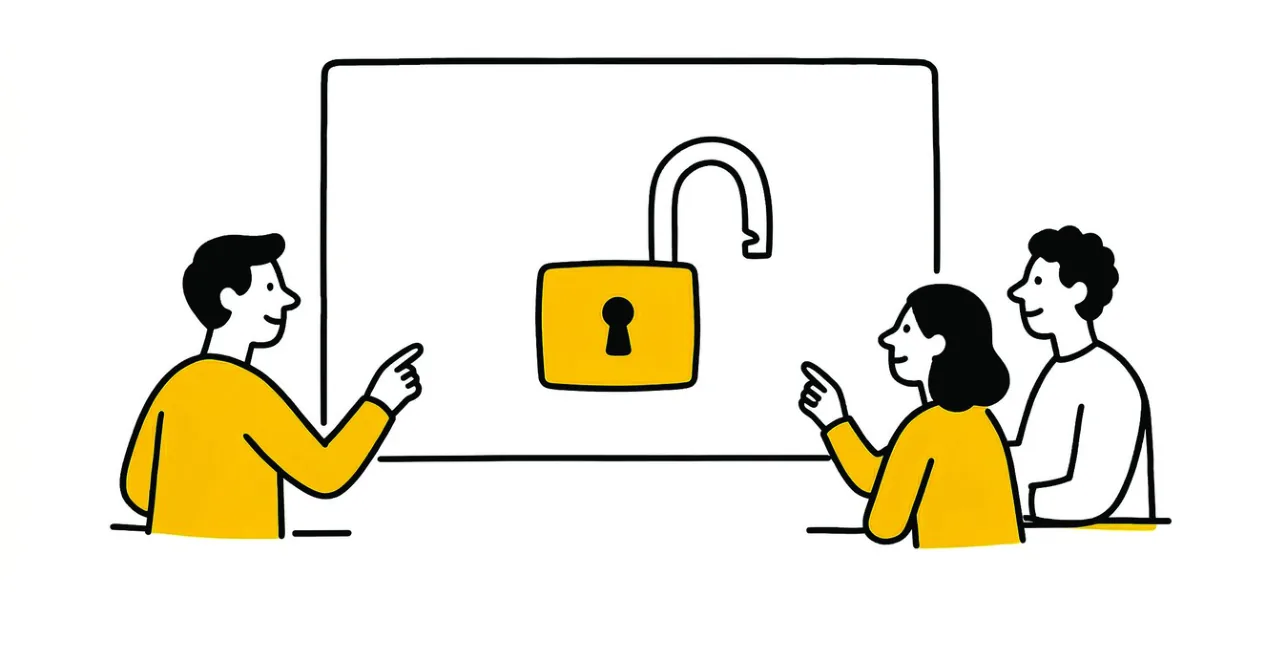
'Open by default' is more than a communication style, it is a structural principle for how work is shared. Work is visible unless there is a specific reason for it not to be. Problem statements stay accessible, assumptions are written down rather than implied, and hypotheses can be traced from origin to testing. Dashboards and strategic discussions live alongside the work rather than in detached channels.
This visibility changes behavior. When insights from the Discover phase are open beyond a small group, alternative interpretations surface earlier and weak signals appear sooner. When trade-offs in the Define phase remain visible, they are easier to examine because context is shared. Teams become less inclined to settle for convenient solutions when their assumptions are exposed.
When execution is visible, drift is easier to detect and initiatives remain connected to the original tension. 'Open by default' reduces political friction by replacing private alignment with shared clarity, keeping the problem space open long enough to preserve understanding before solutions take over.
But openness only works with a home. Visibility needs a defined, dedicated space, ideally AI-searchable, where relevant context lives and can actually be found. Without that structure, open by default degrades into noise: everything technically available, nothing findable, and the sheer volume of information making the relevant and current harder to reach rather than easier.
'Dogfooding.'
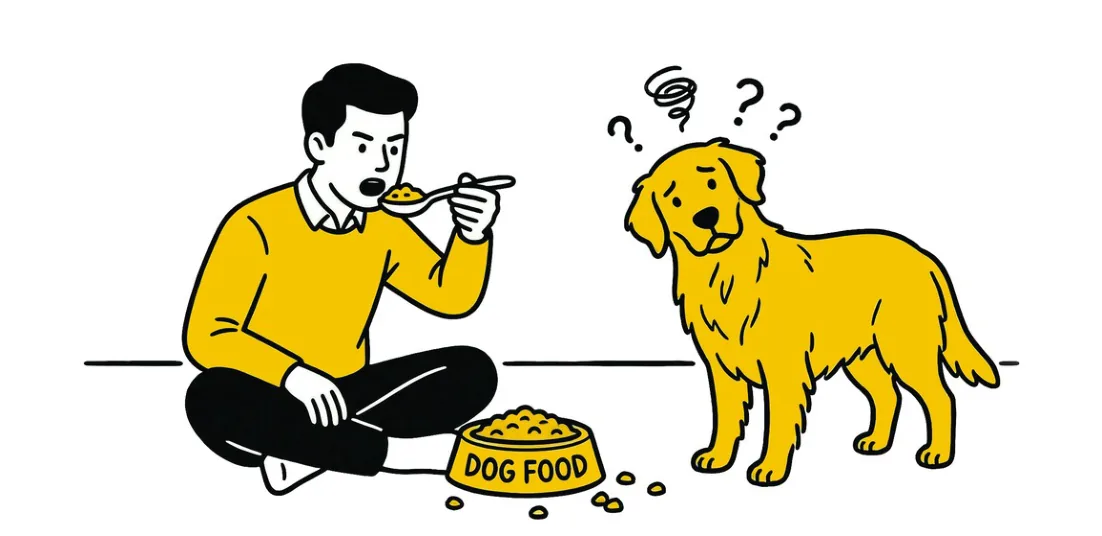
A Collaborative Operating System is only ever a theory until it is used under pressure. The test is not whether people adopt it when things are calm, but whether they stay inside it when things get hard, or quietly revert to private documents the moment the stakes rise. That is what dogfooding is for: using your own tools, workflows, and AI systems before asking anyone else to, under the same conditions everyone else will face. And it is not a one-time test; conditions keep changing, so the system must keep being used under them, or it drifts back into theory.
Internal workflows are the first proving ground. Exploration, problem framing, and delivery tracking happen inside the same shared environment meant for wider adoption, not in a separate place kept tidy for show, so cross-functional tension is felt directly rather than simulated. If the system cannot hold the misalignment that already exists between functions, it will not hold the tension between a value proposition and a real customer's messy situation. Feedback loops must be close to frictionless: an easy way to say what is not working mid-work, and the trust that input was heard and weighed, because a system that stops receiving feedback stops learning.
Handled well, friction becomes signal: alignment gaps and coordination slowdowns show exactly where the system needs to improve. Over time a reinforcing cycle forms, visibility accelerates learning, learning builds trust, trust increases adoption, adoption widens visibility, and the system earns its adoption by working rather than being forced on anyone.
Share the #Bad version.
Perfection slows innovation because it delays the moment when assumptions meet reality. Every idea rests on assumptions, about the customer, the market, the technology, and most of them are wrong in ways nobody can see from the inside. The only way to find out which ones is to expose them, and the earlier that happens, the less it costs. When teams wait to share ideas until they feel complete, those weak assumptions remain untested for weeks, and alignment quietly forms around logic that may be flawed. By the time the work is finally shown, so much effort has gone into it that criticism feels like an attack rather than a contribution, and the flaws that would have been cheap to fix early have become expensive to fix late. Sharing the #badversion reverses this: drafts, preliminary reasoning, and evolving hypotheses are shared deliberately, while the work is still cheap to change and the ego attached to it is still small. The name does half the work on its own: calling something a #badversion out loud lowers the stakes for everyone in the room, because nobody has to pretend it is finished.
The Beatles understood this. In the Get Back sessions, George Harrison hears a new idea and says, "I think it's awful, actually," and Paul McCartney's answer is that then they will have to come up with something better. No offence taken, no defence mounted, just the shared understanding that an honest verdict on a rough idea is the fastest route to a good one. Some of the most loved songs ever written emerged from a room where "awful" was an acceptable thing to say. Now ask the modern question: when did your AI last tell you an idea was awful? The machines are relentlessly agreeable. They polish whatever they are given, extend whatever direction they are pointed in, and rarely push back. That agreeableness makes human candour rarer and therefore more valuable, and the #badversion is the practice that keeps it alive: it creates the moments where a colleague can still say what the machine will not.
It also changes the role of leadership. Faced with a polished presentation, leaders instinctively interrogate and hunt for flaws, because finding the weakness is the only contribution left to make. Faced with a #badversion, the flaws are already apparent and openly admitted, so the dynamic inverts: leaders are invited to collaborate on the fix instead of prosecuting the pitch. The conversation shifts from defending the work to improving it, and the room gets the benefit of a leader's experience while that experience can still change the outcome. It also signals something cultural: if rough work is safe to show the boss, it is safe to show anyone. The goal is not presentation quality but problem precision, because a precisely framed problem shapes everything that follows, the questions asked, the experiments run, and the solutions considered.
Comfort with sharing the #badversion and the principle of 'Open by default' are fundamentally intertwined. Openness only matters if what is opened is honest, and honesty about rough work only survives in an environment where visibility is normal rather than threatening. A team can be open and still perform for each other, sharing only what already looks good; the #badversion is what makes the openness real. Each practice reinforces the other, and together they lead to significantly increased speed in an organization: assumptions meet reality sooner, corrections happen while they are still cheap, and nobody spends weeks polishing something that should have been abandoned in its first hour.
FeedForward.
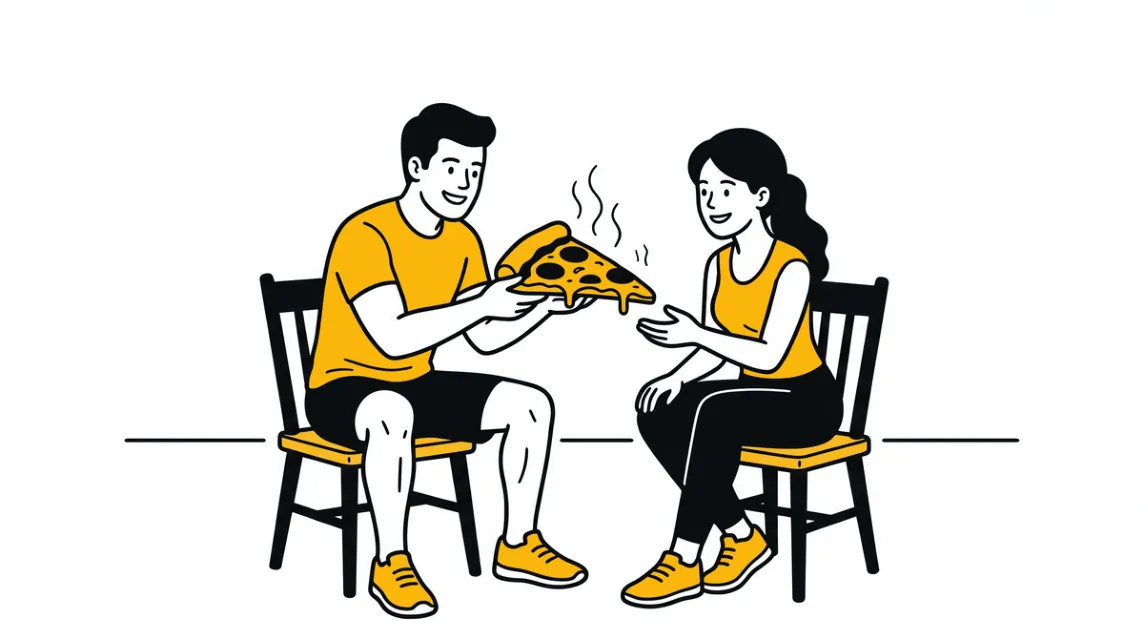
Everything so far in this design keeps the organisation honest with itself. Open by default, the 'Bad version' and dogfooding are all internal candour, and they work, but colleagues share the same context, the same vocabulary, and slowly the same blind spots: an organisation can be perfectly honest internally and still be wrong. The missing leg of the learning system is the customer, not a persona on a slide or a score in a dashboard, but a real person reacting to real work.
FeedForward is that leg: a standing program, not an occasional project, of weekly remote sessions and monthly in-person ones putting working teams directly in front of real users. The design choice that makes it work is who carries the burden: the Research team absorbs the recruiting, scheduling, consent, and setup, so a session costs a team almost nothing. Remove that friction and customer contact becomes a habit available to anyone: the designer with a rough prototype, the engineer with a question, the marketer testing a message.
The word directly carries weight, because second-hand insight has almost no force. A report can be argued with or politely filed; a customer struggling with your product on a live call cannot. Teams change what they build in proportion to the hours spent watching real users, not the reports they read. That is why the makers attend, not just the researchers: insight must land in the heads that will act on it. And the rhythm matters: a single study is a photograph, a weekly cadence is a feed, so the 'Bad version' meets a real customer within days, while still cheap to change.
Sitting in front of a customer well is a skill: the temptation is to pitch and rescue the user the moment they hesitate; the discipline is to ask, watch, and let the silence work, because what a customer does tells you more than what they say, and what they say unprompted more than what they agree to when led. The program serves every phase of the loop, interviews in Discover, concept and usability tests in Define, watching real use in Deliver, with everything captured into the shared workspace and research library so one team's session compounds for all.
Three failure modes quietly kill programs like this. Outsourcing the listening loses the force of the encounter in the handover. Validation theatre books sessions to collect applause for decisions already made. Volume without capture lets sessions happen, teach, and evaporate. The honest test is whether sessions change decisions.
AI can organize: cluster the feedback, summarise the sessions, surface patterns no individual would spot. But a person keeps the decision. AI-generated insight is fluent enough to manufacture closeness while actual contact thins out, until an organisation knows its model of the customer better than any customer. The machine makes the listening scalable; humans stay responsible for the hearing.
When the program runs, debates once settled by seniority get settled by proximity: put both versions in front of users this week. The customer becomes an ambient presence, correcting the internal consensus before it hardens. An organisation that only listens to itself gets faster at being wrong. One with a live line to its customers gets faster at being right, and the difference between those two speeds is the whole game.
Design for collaboration.
Customers don't see your org chart. Stop working like they do.
No customer has ever cared how a company is organised on the inside. What they care about is whether their problem got solved, and whether solving it meant being bounced between five teams and repeating themselves at every handover. There is a name for why: Conway's Law, the old observation that organisations produce designs that mirror their own communication structure, which means the customer eventually meets your org chart whether you show it to them or not.
Governments are the ultimate example, and one of us saw it first-hand working in digital government in Australia. The service design movement in the UK, New Zealand, Singapore and Denmark rebuilt services around life events instead of agency boundaries: having a baby, losing a loved one, starting a business. One event, one journey, however many agencies it crossed behind the scenes. The agencies were not wrong to exist. Their boundaries were simply the government's convenience, not the citizen's, and the moment they shaped the citizen's experience, they became the citizen's burden. Customers, like citizens, do not care about your company. They care about solving a problem they have, and their experience of that problem is one continuous thing, not divided by function. Design for collaboration does not require erasing functional structure, where expertise lives. It requires strengthening the bonds across functions: a shared vision of the customer's journey, trade-offs made openly across teams, and a relentless simplification of the path the customer actually travels.
It begins with cross-functional partnership, a refusal to let a customer problem be chopped into pieces and handed off between silos. Handovers are where problems lose their shape, because nobody is accountable for how the pieces add up. It continues with collaborative strategy. Strategy stops being a document that leadership writes in private and announces, and becomes something teams shape together and keep shaping as they learn. This closes the gap where most strategies quietly die: a direction the doers helped set is better informed and more likely to be followed. And it culminates in multiplayer AI. Rather than a private tool behind a single screen, AI becomes a visible participant on the shared canvas, its contributions part of the conversation instead of hidden inside one person's workflow.
Three ideas sit inside this design:
- Multiplayer AI, AI as a team member everyone can see and use together
- Cross-functional partnership, solving problems the way customers experience them, not the way org charts divide them
- Roles and responsibilities, ownership redesigned around outcomes, contributions and context rather than tasks
What unites all three is an end to solitary work. Each form of isolation hides part of the work from the people who could improve it, and leaves the organisation solving in fragments a problem the customer only experiences whole.
Multiplayer AI.
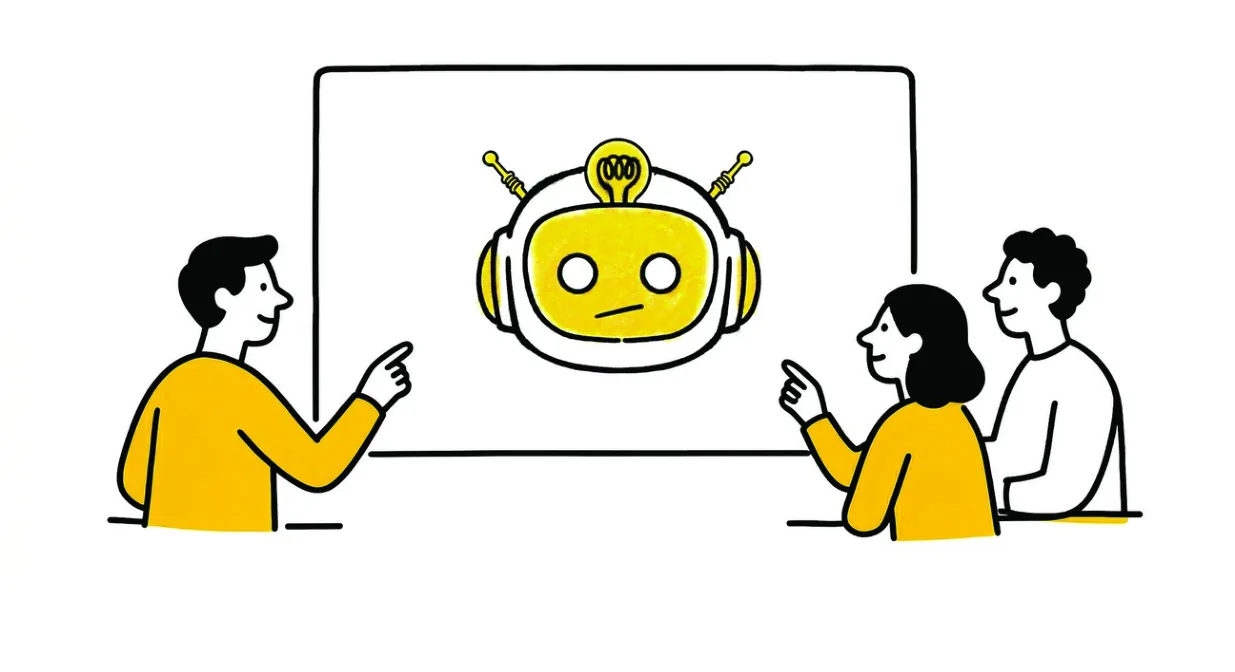
Context determines whether AI becomes a unifying force or a source of noise. When AI operates inside private prompts, detached spreadsheets, or personal workflows, it generates outputs that may appear sound yet remain unaligned with the rest of the organization. Individuals can produce persuasive narratives and analytically defensible analyses, but without shared visibility these contributions collide rather than complement one another. Coherence dissolves because intelligence is disconnected.
To counter this, tooling must be embedded in shared collaborative environments. AI must work where strategy, execution, metrics, and dialogue already coexist. Inside shared canvases or workspaces AI can support collective sense-making in ways that strengthen organization-wide alignment. AI works even better, if it is integrated into project workflows from the start. Where prompts, context, and the resulting outputs are visible and transparent to the entire team. But more on that later in our chapter on workflows. Collective AI is possible, but it needs to exist within an environment which is genuinely collaborative by design.
Inside such environments AI can:
- Summarize discussions and highlight emerging patterns
- Generate structured outputs aligned with agreed framing
- Support ideation without bypassing validation
- Accelerate documentation without detaching it from context
- Query live data sources during decision making
- Surface alternative interpretations and make trade-offs explicit
Cross-functional partnership.
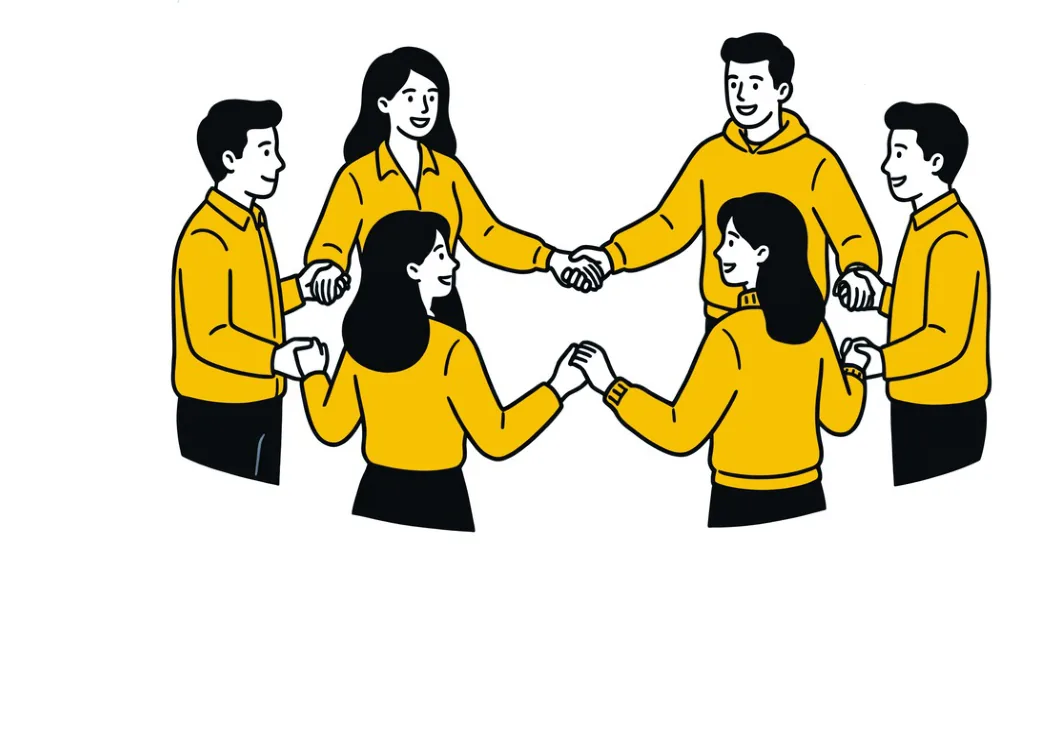
A Collaborative Operating System fails if teams remain siloed by function. Innovation emerges at the boundaries between disciplines, not within them, and cross-functional partnership means building relationships outside your immediate team so tension surfaces early rather than late. Different functions carry different assumptions about what matters: product teams prioritize feasibility, design teams desirability, commercial teams viability. These tensions are the raw material of better decisions, and the system's job is to make them productive rather than political. In practice, the partnership runs at three levels, local, horizontal and vertical, and one thread runs through all three: AI as a teammate rather than a private tool.
That only works when the goals are shared. When teams optimize for departmental success, collaboration becomes transactional, a favour to be traded. When they align around shared outcomes, collaboration becomes structural, and the system makes this visible by connecting work across functions in the same environment, so misalignment becomes obvious before it becomes costly.
The evidence for the AI thread is the strongest yet gathered. The Cybernetic Teammate study, a large field experiment with 776 professionals at Procter & Gamble, found teams working with AI roughly three times more likely to produce elite-tier work than individuals working with AI. Teamwork raises the ceiling; it does not guarantee the floor: a team with low trust and unclear norms still produces duds, with or without AI. The study also found AI helped specialists think across functional boundaries on their own, but the elite-tier results still belonged to real teams. AI lowers the walls; it does not build the partnership. That remains human work.
Local: within the team.
Teams need freedom to work how they see fit; the people closest to the work are the best judges of how to do it. What cannot stay implicit is alignment on goals and ways of working, urgent now that the democratisation of crafts has team members routinely crossing into each other's territory. Three things need explicit agreement: user manuals, where each person writes down how they work best and what wears them out; team formation workshops, where the team aligns on its goals and how it will get things done together; and a charter for how the team uses AI, what gets reviewed by whom, and where a human decision is required. Trust and clear norms are exactly what separate the elite-tier teams from the ones that merely have the same tools.
Horizontal: between teams.
This is where most organisations mistake sequence for collaboration: product hands to design, design to engineering, engineering to marketing. Calling that collaboration is calling a relay a conversation. Real partnership means the relationships exist before the work needs them: product sits close to marketing and sales, design is in the room when the business case is argued, and every function shares one vocabulary for how work moves, Discover, Define, Deliver. The rituals do double duty: kickoffs and milestone reviews are the standing moments where functions argue the trade-offs in the open and leave with a shared picture instead of a handover document.
Vertical: with leadership.
This level is changing fastest. Leadership was always about context; now it is almost entirely about context, and context is becoming reusable: written down and carried by the shared environment into decisions the leader never personally touches. A leadership team that maintains rich, current, accessible context multiplies every team it serves; one that hoards it becomes the bottleneck the whole system queues behind. Two practices anchor the level. Portfolio management: deciding where the organisation's weight goes and making the why visible. And collaborative strategy, in the shape of the W: direction goes down, plans come up, integration goes down, commitment comes back up, and at every turn the strategy gets more real, because the people who will deliver it kept shaping it.
What the three levels add up to.
Cross-functional partnership turns competing priorities into complementary perspectives: the local level builds teams whose trust and norms let augmentation land, the horizontal level replaces relays with real conversations, the vertical level replaces direction-from-above with direction built together. Through all three runs the same teammate, AI that everyone can see, working on the same visible material as everyone else. Over time, the boundaries between disciplines stop being where work goes to lose its shape and start being where the organisation's best decisions get made.
Roles and responsibilities.
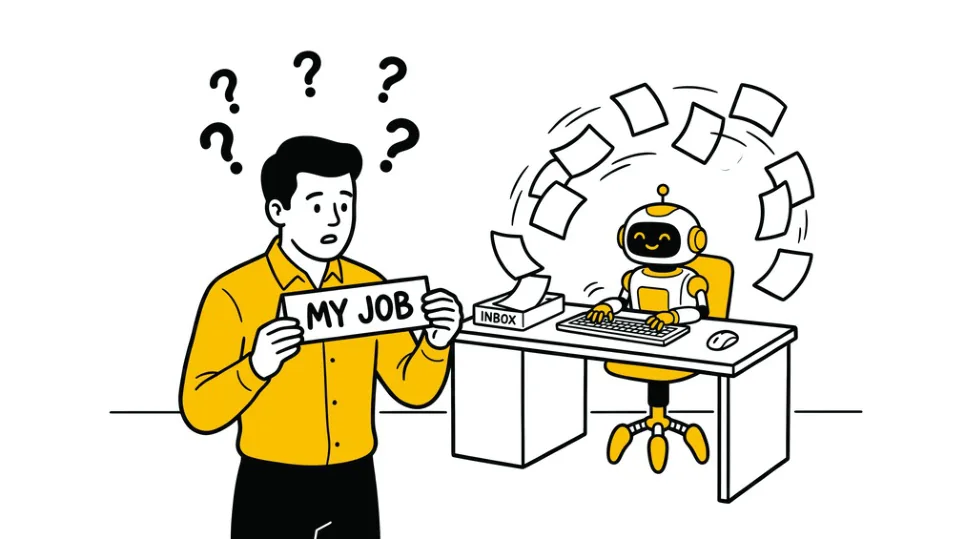
The two doubts named at the start of this book included what happens to roles when AI blurs the boundaries between them. This is where the answer begins, and it starts with one shift: stop designing roles around tasks. Design them around outcomes, contribution, and context. Tasks were a reasonable unit when skills were scarce and work was divided by who could do what. Now that AI has made the doing widely available, a role defined by its tasks is a role defined by exactly the thing that is changing fastest. What does not change is that someone must own the result, someone must bring the judgment, and someone must hold the picture. Three kinds of ownership, and every important workflow needs all three.
The cost of getting this wrong is already visible, and the earlier chapter named it: role debt. When roles stay defined by tasks while AI absorbs the tasks, people end up with titles that describe half of what they do, evaluated against the half that is disappearing, stretching into responsibilities nobody has named. Redesigning around outcomes, contribution, and context clears that debt at the source, because the parts of a role it names, the result, the judgment, the picture, are precisely the parts AI does not absorb. A role built on them stays true as the tools change underneath it.
Outcome ownership.
Every important workflow needs one clear outcome owner. Not the familiar division, where Product owns the product, Marketing owns campaigns, and Sales owns customers, but a sharper question: who is accountable for the customer or business outcome this workflow exists to produce? The outcome owner does not do everything, and does not need to. They orchestrate the system: they hold the goal, watch the whole journey rather than any single stage, and carry the accountability that otherwise dissolves across functions. The linear trap taught us what happens without this, when ownership is subdivided along with the work and the honest answer to "who owns the outcome" is nobody.
Contribution ownership.
Functional roles do not disappear. Their purpose changes. AI democratizes the ability to create analysis, prototypes, content, code and insights, which means the production that used to define each function no longer belongs to it exclusively. Functions increasingly become owners of expertise and capabilities rather than owners of tasks: the place where depth lives, where quality is judged, and where the hard trade-offs of a discipline are understood. The critical question for every contribution becomes: who brings the expertise, who makes the trade-offs, and who decides? AI can contribute. AI can challenge. Humans remain accountable.
The shift is concrete enough to put in a table:
| Role | Old responsibility | AI-era responsibility |
|---|---|---|
| Product | Write requirements | Frame customer problems & outcomes |
| Design | Design interfaces | Shape experiences & test alternatives |
| Engineering | Build specifications | Architect solutions & manage tradeoffs |
| Marketing | Create campaigns | Generate & validate customer demand |
| Sales | Sell products | Develop customer relationships & opportunities |
| Data / AI | Provide analysis | Create intelligence & decision support |
| Finance | Control budgets | Enable economic trade-offs |
| Leadership | Make decisions | Create context, direction & constraints |
Context ownership.
In an AI-enabled organisation, context becomes infrastructure. People and AI alike need access to the strategy, the customer insights, the previous decisions, the constraints, the learnings, and the trade-offs already accepted, because every judgment made without that context is a judgment made partly blind, at machine speed. Someone has to own keeping that context rich, current, and reachable. Increasingly, that someone is leadership. Leadership becomes less about having all the answers and more about creating the context in which good decisions can be made, by anyone, anywhere in the system, without a meeting.
Apply it at three levels.
The three ownerships land on the same three levels the previous section built. Local, the team: how do we work together? Goals, team norms, the AI charter, and working agreements. Horizontal, the workflow: how do we create value together? Cross-functional partnerships, shared language, milestones, and tradeoffs made in the open. Vertical, leadership: what context and choices guide the system? Strategy, portfolio, priorities, and constraints. And AI runs through all three levels as a multiplayer teammate, contributing wherever the work is visible enough for it to help.
A simple new leadership model.
The old model was Know, Decide, Delegate, Control: the leader knows the most, decides accordingly, hands down the tasks, and checks the execution. The new model is Context, Align, Enable, Challenge: create the context in which others can decide well, align the teams around outcomes rather than instructions, enable them with capability and authority, and challenge the work candidly while it can still change. It is not a softer model. Challenging a 'Bad version' in the open takes more of a leader than approving a polished deck ever did.
So the question that designs a role is no longer "who owns this task?" It is: who owns the outcome, who contributes, what context do they need, and where do we make the trade-offs? Answer those four questions for every important workflow and the organisation changes shape without a reorganisation. Functions remain, expertise deepens, and the org chart stops pretending to describe the work. That is how you move from a functional organisation to an augmented one, without eliminating the functions that made it good in the first place.
Design for agency.
More power to the people running the system, not less.
The real fear about AI at work is not that it will turn out to be useless. It is the opposite. The fear is that it quietly takes over, doing more and more of the thinking until people are left executing decisions they did not make, owning outcomes they did not shape, and running a system they no longer fully understand. That is a reasonable thing to worry about, and design for agency answers it directly rather than waving it away. It is not about resisting AI or slowing it down. It is about making sure the person stays the author of the work even as the work is augmented, that they can still see why something is being done and step in to change it. The rule is simple. Augmentation has to expand what people can do. It must never shrink it. The measure of whether AI is working is not how much it does on its own, but how much more its users are able to think and decide because of it.
is only ever as good as the context it can reach, which means an organisation's knowledge, its decisions and its customer insight can no longer be treated as loose material lying around. They have to be treated as seriously as any other piece of infrastructure, made reliable, current and available, because they are the fuel the whole system runs on.
Three ideas sit inside this design:
- Human agency and enablement, AI expands capability rather than replacing judgment
- Context as infrastructure, the fuel AI runs on and a bridge to the digital workspace ahead
- The Master Command Center, a shared home for strategy, workflows and decisions
It starts plainly, with human agency and enablement. AI should raise a person's capacity to think and act, and it should stop short of replacing their judgment, because judgment is the thing most worth protecting. It becomes concrete in the Master Command Center, a shared space where strategy, workflows, insights and decisions all live together in one place. When they do, agency stops being something individuals hold quietly on their own and becomes something the whole organisation can see and share, so that being in control is a visible, collective state rather than a private one. And it ends with the newest and most far-reaching idea of the four, context as infrastructure. The argument is that AI
Put together, the four designs answer one question that has been running quietly underneath all of them. Once work moves fast, stays visible, and is shared openly across people and AI, who is actually in control? It is a fair question, and the whole point of design for agency is to make sure the answer never drifts. People are in control, by design, not by accident and not by whatever the tools happen to allow. This is also where the way of working meets the workspace it needs, because agency at this scale depends on a shared digital environment rich enough to hold it, which is exactly where the next part of the book goes.
Human agency and enablement.
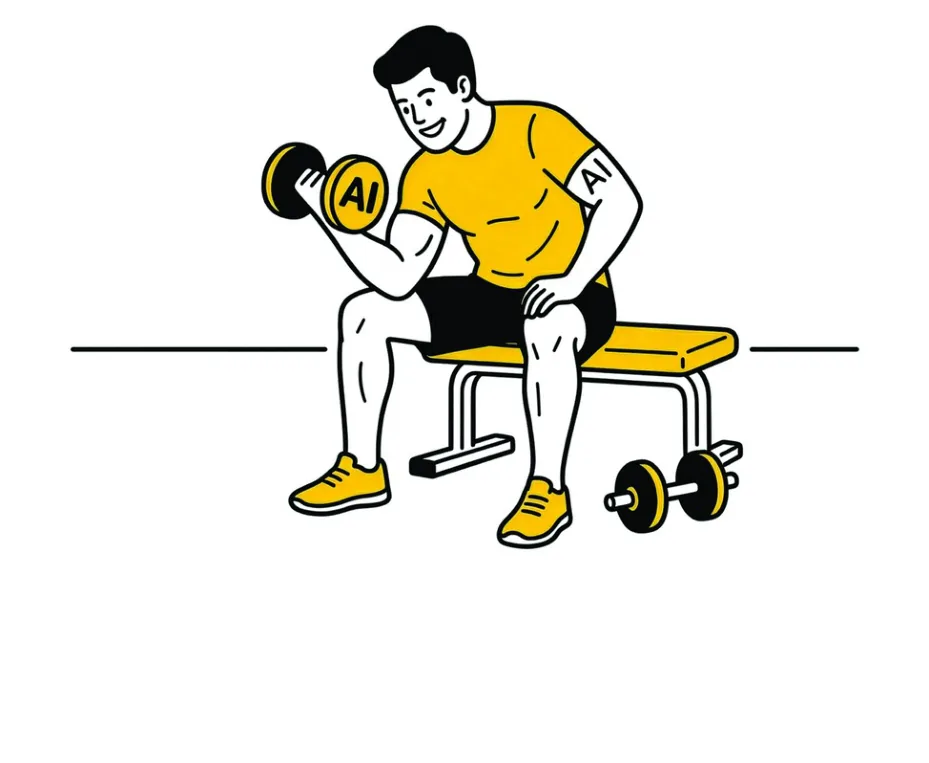
For tooling and AI to genuinely help rather than hinder, an organisation needs more than access to the technology. It needs discipline, and it needs to build real capability in its people. That begins with understanding how to use AI responsibly. People have to be able to tell the difference between an insight a model has generated and evidence that has actually been validated, and they have to anchor whatever the AI produces in a clearly framed customer problem rather than letting it float free. The right posture is to treat AI as a co-pilot in reasoning, something that helps you think, rather than a shortcut that hands you a conclusion to accept without question. And it should be embedded inside the workflow where the work already happens, not layered on top as a separate step, so that the tools line up with the structural principles of the system and intelligence connects rather than competes. None of this is knowledge people simply have. It has to be built deliberately, the same way any other capability is built, through practice and shared standards rather than a single training session.
Human agency stays at the centre of this relationship. People decide where AI is applied, how it supports a decision, and which of its outputs are worth exploring further. Rather than passively accepting whatever is generated, or dismissing it out of hand, teams actively steer the system. They frame the questions, they interpret the signals that come back, and they take responsibility for the final judgment. Framing is where much of the value is won or lost, because a well framed question turns AI into a partner, while a vague one turns it into a generator of confident noise. AI can extend what people are capable of, sometimes dramatically, but direction and accountability stay firmly with the people using it. The moment that ownership slips, augmentation has stopped serving them and started replacing them, which is exactly what this design exists to prevent.
When tooling is used in this spirit, it does more than speed things up. It strengthens the alignment of the whole system and reinforces the cultural principles the system depends on. Visibility widens, because more of the reasoning is out in the open. Assumptions become testable, because they are stated rather than buried. And learning accelerates, because the loop between asking and knowing gets shorter. The gains are quiet, but they accumulate, since each one makes the next decision a little easier to get right. Human intelligence and artificial intelligence, handled this way, do not pull against each other. They compound, each making the other more useful than it would be alone.
This is the relationship we take up in more detail later. Within 'Augmented Collaboration' we set out a human and AI collaboration framework in part four, a way of being deliberate about how the two work together, which is why we treat it as part of the operating system rather than an add-on. The underlying claim is straightforward. When tools are built to support alignment rather than simply to increase output, the work becomes not only faster but structurally reliable, dependable because of how it is put together rather than in spite of it.
Context as infrastructure.
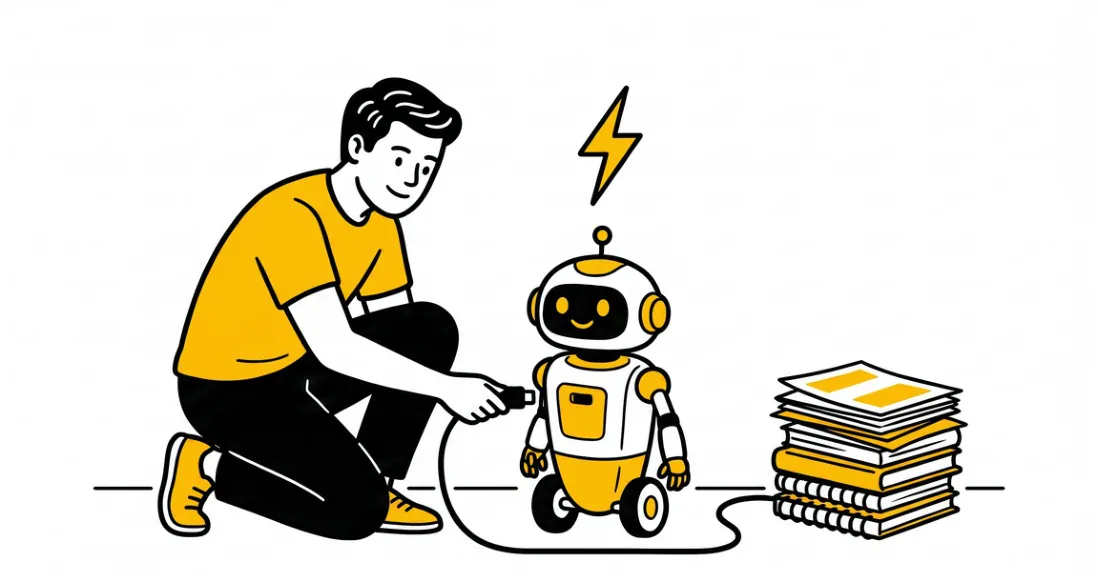
Ask your best AI a question your best employee could answer, and compare the replies. The employee's answer carries years of decisions, failures, customers and hallway conversations. The AI's answer carries none of it, and it shows. The difference is not intelligence but memory, and whose reach it sits within. AI is only ever as good as the context it can reach, yet in most organisations that context sits scattered, undocumented and just out of reach. This principle argues that an organisation's knowledge is no longer something to file away when there is time: it is infrastructure, in the same category as servers and networks. Infrastructure was always the scaffolding nobody thought about while working, networks, servers, office space; this principle adds the organisation's own knowledge, decisions and customer insight, made continuously available to the people and, increasingly, the AI systems that need it to do good work.
AI does not fail because the model is weak; it fails because it cannot see what a knowledgeable employee would already know: the decision made last quarter, the complaint in a support ticket, the reason a promising project was shelved. Deprived of that, AI produces what anyone working blind produces: generic output, confidently phrased and shallow underneath. Give it context and the model behaves less like a stranger and more like a colleague: weighing ideas against decisions already taken, connecting a fresh signal to a pattern from months ago, noticing a suggestion was already tried and abandoned. Not a smarter model: the same model, finally able to see. AI is a brilliant new hire on day one, capable but knowing nothing of your customers, history or decisions, and it needs the same thing: constantly, at scale, in a form it can read.
Context is not data and not documentation, and an organisation can drown in both while starving for it. Data is the raw record; documentation is the tidy version written for an audience; context is the connective tissue between them, the why behind the what, usually unrecorded because it felt obvious to the people who held it. In most organisations it lives in heads, old message threads, and files no one has opened in a year, and the cost is paid quietly: the same questions answered again, decisions relitigated, expensive lessons learned a second and third time. It never shows up as a single dramatic failure, which is exactly why it persists.
The principle reframes a question that used to sound optional: should we document this? becomes an infrastructure question, in the same category as reliable internet, because everything else in an augmented organisation quietly runs on it. And it carries infrastructure's obligations: kept current, because stale context leads reasoning astray; accessible when needed; legible to machines as well as people; and owned, because unowned context quietly rots until the system goes blind again.
The stakes only rise from here. An organisation with excellent models and poor context will be outperformed by one with ordinary models and excellent context, because the second is reasoning about reality while the first is guessing at it. That makes context one of the few advantages genuinely hard to copy: it cannot be bought in a hurry, only built slowly from the organisation's own knowledge. And it makes this principle a hinge. Looking backward, it completes the case for human agency, because people can only stay in control of a system that can see what they see. Looking forward, it asks where all this context actually lives. That place is the digital workspace, and it is where the book turns next.
The Master Command Center.
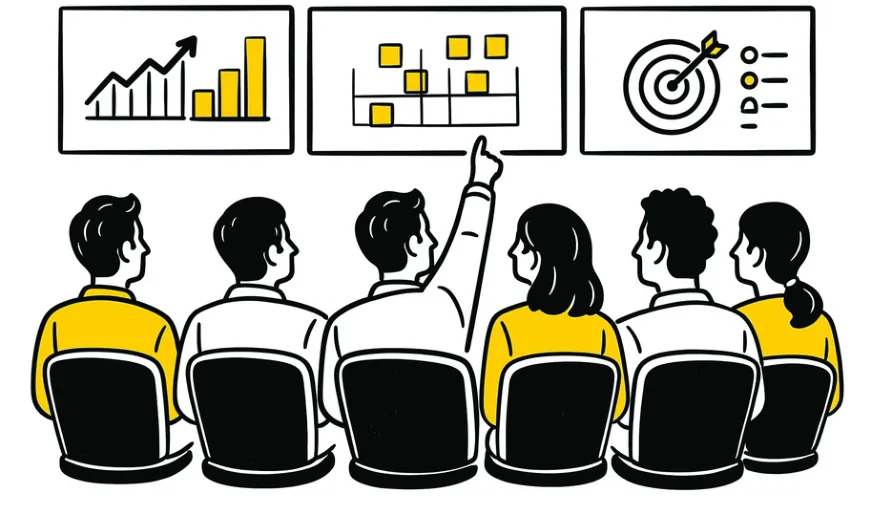
If context is infrastructure, the Master Command Center is its form: the shared operating system where context, priorities, workflows, decisions, knowledge and AI agents turn strategy into action. Obeya is Japanese for big room, the lean space where plans, problems and progress hung on the walls for all to see at once. It brings that idea into the augmented era; it is not a dashboard: dashboards describe work after the fact; here missions, initiatives, progress, customer problems and hypotheses stay visible as the work happens.
A traditional command center runs on translations: strategy to departments to projects to tasks, returning as reporting, each losing context until the top receives a summary of a summary. The augmented chain: customer value shapes workflows, human and AI teams carry them and decide on shared context, decisions produce outcomes, outcomes feed learning back. Nothing is translated; everyone works from the original.
The space has five layers. Direction holds the North Star, strategy, business model and strategic priorities. Value holds customers, their jobs to be done and the workflows serving them. Collaboration holds the human team, the AI team, their roles and shared context. Execution holds initiatives, experiments, decisions and automations. Learning holds signals, outcomes, feedback, metrics and knowledge. The portfolio practices, assumption map, ambition matrix and funding split, quarterly review and decision log, live here too.
Three parts form its memory and judgment. Shared Context gives humans and AI one source of truth to reason from. The Decision Center makes decisions visible and auditable, with their assumptions and trade-offs, ending the ritual of relitigating settled ones. Knowledge Memory keeps lessons available to the next team instead of leaving with the people. The AI side is explicit: Human + AI Team maps roles and handoffs across both teammates, AI Superpowers defines how AI contributes, sensing, synthesising, generating, challenging or automating, and the AI Control Tower keeps every agent, prompt, automation and permission visible with outputs and exceptions: the governance behind bold delegation.
Through it runs a continuous loop, sense, decide, act, measure, learn, adapt, run by humans and AI together rather than over a wall. The effect is simultaneity: strategy, execution, metrics and learning stop living in separate tools, decisions happen where the information exists, and bottlenecks appear in the work, not months later. Leaders stop micromanaging and start seeing, alignment meetings shrink because alignment is built in, and autonomy grows because direction never disappears from view.
One design principle guards it all: never another information dump. It must answer, at any moment: Where are we going? What matters most? What is happening? Who is doing what? What is AI doing? What decisions are needed? What are we learning? What next? Everything earns its place by answering one of them: mission control, not a dashboard. Where all this context lives is where the digital workspace comes in.
The future of work.
The tools will keep improving; that is the least interesting prediction in this book. What the future of work hinges on is something no model update can ship: whether organisations can think, decide and learn together.
Long before AI, the best teams had a place where the team did its thinking, a war room, an unwipeable whiteboard: the brain of the team, where individual knowledge became collective understanding. It matters more now: for most of history, scarcity did the aligning, analysis was expensive, so teams had to choose carefully and together. When everyone can produce polished strategy, working code and finished designs in an afternoon, the risk is no longer being too slow but ceasing to make sense as a whole, because ten brilliant answers to ten slightly different questions do not add up to a direction. What AI has not changed is what makes collaboration work: people with shared context, whose whole is greater than the sum of its parts.
The book's diagnosis arrives there from four directions. Individual speed is real: controlled studies find people with AI complete tasks roughly a fifth faster, yet survey after survey finds more than eight in ten organisations with no measurable company-level gain. That gap is not a lag; it is a leak. The value drains away at handoffs that strip out the reasoning the next person needs, hard to spot because the work looks finished until it collides with another team's version of done. Nor is the answer people or structure: fluency and redesign are sequential, not competing. Structure without fluency produces new boxes full of old behaviour, while fluency without structure hits three ceilings: nobody owns the cross-team workflow, nobody has the authority to redesign it, and the metric that would prove the new way better does not exist yet, so the old way wins by default. The hardest evidence agrees: the Cybernetic Teammate study found it is the team working with AI, not the individual, that produces elite-tier work at scale. Augmentation compounds when it is shared.
The future of work asks three shifts: from scarcity to abundance, from delivering to co-creating, and from hours to outcomes.
From scarcity to abundance.
The disciplined methods of the last twenty years, testing before building, validating before investing, killing ideas early, were rationing systems for a world where being wrong at full cost could sink a team; every brainstorm ended with a wall of good ideas and funding for one. That ceiling is gone: ten directions now cost what one used to, and the wildcards that never survived the meeting can simply be built and tested. But when everyone can generate endless options alone, the output is noise, so the winners will explore widely and converge deliberately, with instruments the book already supplied: the ambition matrix to weight the core against transformational bets, the assumption map to settle arguments by evidence rather than seniority, and the portfolio rhythm to retire what the numbers no longer support.
From delivering to co-creating.
An old law of communication holds that communication usually fails, except by accident. It has never been more true: individuals moving ten times faster can move in ten directions. The production line provided the checks when every station took a week; now that briefs, prototypes and builds have collapsed in duration, the sequence has lost its reason to exist. The team can work like a band mid-jam instead of an assembly line, everyone reacting to the work, everyone allowed to say the version is not good enough. That friction is the point, and AI cannot provide it: relentlessly agreeable, it lets unchallenged work converge on adequate; the bad-version culture from Design for Learning keeps the human challenge alive. Co-creation also pays in a way the line never did: a 2022 study in Small Group Research links a team's shared belief in its combined ability to stronger trust, more positive emotion and tighter bonds, part of why co-creating teams ship their best work and have more fun. In practice: frame together, generate with AI in the room, decide before anyone leaves. The Cybernetic Teammate study adds encouragement: AI already helps individuals reach across functional boundaries; the walls are softer than the org chart admits.
From hours to outcomes.
This is the hardest shift because it is cultural. The dials that move first are all volume: more documents, more prototypes, more code. Individuals look faster on each while the organisation does not, because volume is motion, not impact, and teams sometimes avoid measuring impact for fear of what it would say. The way through is a change of mandate: leadership saying plainly that it no longer cares how the work gets done as long as the outcomes are better, permission to take workflows apart and rebuild them around the outcome. AI absorbing execution creates a new vantage point, where the questions become are we solving the right problem, and did anything improve for the customer. The first honest numbers will disappoint, which is why they are worth having: a number a team owns is the beginning of improvement; one it curated is the end. Leaders carry a disproportionate share, because teams measure what leadership asks about. Ask what changed for the customer, in every review, without exception, and the organisation slowly reorganises itself around the answer.
Three questions are worth an afternoon with any team. How do we navigate a sea of possibilities and still decide together? Where do we make room for co-creation instead of merely accelerating our handoffs? And what would our work look like redesigned around outcomes rather than activity? The answers differ by team, so find them in the room, together, and treat them as hypotheses: try for a quarter, review, adjust. Ways of working are products too.
None of this happens by proclamation; it happens through ways of working, designed deliberately and improved in use, built through the Design-For chapters. Design for Flow gives the work its rhythm, AI carrying production while people carry judgment. Design for Learning keeps knowledge moving in both directions, inward through openness, bad versions and dogfooding, outward through customers who feed the work forward. Design for Collaboration wires people together at every level, because the team plus AI is where elite work comes from. And Design for Agency keeps people the authors of it all, context as infrastructure letting humans and machines see what they are doing. These are not four fixes but one operating system, and the organisations that thrive will not be those with the most advanced tools but those that design how they think together.
The closing thought is the simplest in the book. A 10x team is not ten individuals using AI in parallel; that is just noise arriving faster. It is a group of people with shared context, strong judgment and the ability to learn and decide together, amplified by machines that finally have the context to help. That is the future of work, and it is not waiting for anyone to declare it. It is already being built, one way of working at a time.