The Customer Value Engine.
The engine at the centre of this book starts from a single idea that sounds obvious the moment it is said and changes everything the moment it is believed. Organisations do not create value through departments. They create value through workflows. A department is simply a place where people with similar skills are grouped together. A workflow is the path that value actually travels as it moves from a customer's problem to a customer's satisfaction, and that path rarely respects the boundaries drawn on an org chart. A customer's request does not care which team it lands in, and the value they receive at the end carries no trace of how many departments touched it along the way. The moment an organisation begins to organise around the workflow rather than the department, the whole shape of the work quietly changes, because the question stops being who owns this step and becomes how does value move from one end to the other. Departments do not disappear in this picture; they remain the home of expertise. They simply stop being the unit the work is organised around.
Seen as a whole, the Customer Value Engine is a connected loop rather than a straight line. Customer → insight → value proposition → product or service → business model → customer, and round again through learning, so that whatever the organisation discovers at the far end feeds straight back into what it chooses to explore next. Nothing in the loop is wasted: a failed launch becomes sharper insight, a surprising customer reaction becomes the seed of the next proposition. And the loop turns continuously, not once a year when the planning cycle allows it. It is an engine precisely because it turns, and because every turn should leave it a little wiser than the one before.
Inside that loop run three interconnected workflows. The first is the customer value workflow, which moves from customer insight → problem framing → value proposition → validation → customer action. This is where an organisation works out what customers genuinely value, rather than what it has always assumed they should. The second is the product development workflow, which moves from opportunity → concept → prototype → test → build → launch → learn. This is where a validated sense of value is turned into a real product or service that a person can actually use. The third is the business model workflow, which moves from the existing business → adjacencies → experiments → new business models → scale, kill or invest. This is where new bets are connected to the strategy, so the promising ones are backed and the weak ones are stopped early, without ceremony and without ego. Each workflow has its own rhythm and its own evidence, but none of them is complete on its own.
The distinctive part, and the part most organisations miss entirely, is not the three workflows themselves. It is the handoffs between them. These are not three separate processes owned by three separate teams and stitched together at the end. Customer insight should directly shape product development. Product experiments should directly shape the business models. And the choices made about business models should shape which customer problems the organisation decides to explore in the first place. Most organisations run these as three unconnected pipelines, which is why research gathers dust while products get built on assumptions. When those handoffs are alive and run in both directions, the three workflows stop being a relay race between departments and become a single continuous learning system, each part feeding the others, so that the engine as a whole learns faster than any one of its parts could alone. That compounding is the entire point: the engine does not just produce value, it produces an organisation that gets better at producing value.
When workflows become your growth engine.
Innovation works when wired into a system: a connected way of working that spots opportunities, shapes products, launches with purpose, scales smartly. Workflows are the backbone of that system; the word deserves precision. Most organizations lack not ideas or talent but the connective tissue between them: the insight that never reaches product, the launch that never hears from sales. Visible, shared workflows are that tissue, built by making how you work honest, explicit, and improvable.
What a workflow really is.
A workflow is not a checklist, a diagram, or software. It is a repeatable logic of action that connects intent to impact: strategy into behaviour, decisions into execution, ambition into outcomes. Practically, it is a collaborative picture of how work moves: who does what, when, with which decisions and tools. It becomes powerful in a shared environment like Miro, designed together, kept current, used while working: one canvas of steps, handovers, rules, and success signals. Workflows are not about control but focus and flow, which separates them from the binder nobody opens: documentation describes work, a living workflow carries it.
How to design one.
Start with trigger and outcome: why the workflow exists and what success looks like. Outline the stages as they really run, with today's decisions, loops, and rework, not where the official process says. Map ownership, one owner per stage, handovers visible; inputs and outputs; rules and decision points; the source-of-truth tools; bottlenecks; and metrics, for a feedback loop. Design it as a working session with the people who do the work, and date the result. The first honest version surprises everyone, and that is the point: the process-reality gap is where improvement starts.
The three workflows of the engine.
Inside the growth engine run three interconnected workflows. The customer value workflow moves from customer insight to problem framing to value proposition to validation to customer action: where an organization works out what customers genuinely value, rather than what it has always assumed they should. The product development workflow moves from opportunity to concept to prototype to test to build to launch to learn: where a validated sense of value becomes a real product or service a person can actually use. The business model workflow moves from the existing business to adjacencies to experiments to new business models to scale, kill or invest: where new bets connect to strategy, so promising ones are backed and weak ones stopped early, without ceremony and without ego.
The distinctive part, and the part most organizations miss, is not the three workflows themselves but the handoffs between them. These are not three processes owned by three teams and stitched together at the end: customer insight feeds what gets built, what launches feeds the portfolio, and what the organization learns at the far end feeds what it chooses to explore next. It is an engine precisely because it turns, and every turn should leave it a little wiser than the one before.
The essence of workflows that create ultimate impact.
On a shared canvas the three workflows do more than document: they show the big picture, clarify who does what when, surface bottlenecks early, and adapt as you grow. Their true power is behavioural alignment: shared understanding, autonomy, embedded learning. They make strategy actionable, innovation manageable, execution meaningful: not isolated breakthroughs but a system that repeatedly turns insight into value. That is what a growth engine is: three workflows, one canvas, and a team that can see itself work.
Transforming workflows through AI integration.
In today's rapidly evolving business environment, Artificial Intelligence isn't just automating isolated tasks, it's becoming the central hub for orchestrating and accelerating key business workflows. Across innovation, product innovation, go-to-market (GTM), and operations, organizations are using AI to accelerate decisions, improve precision, and enable continuous learning.
Within innovation workflows, AI functions as a continuous intelligence engine. Rather than waiting for periodic strategy cycles, companies now mine vast external and internal data, such as market trends, competitor moves, or customer information, to detect weak signals and opportunity spaces. Generative models can ideate Business Model variants or product concepts at scale, while predictive tools rapidly evaluate those ideas against historical success patterns. Enterprises and small startups alike rely on generative tools to prototype ideas, as well as filtering and prioritizing innovation opportunities.
In product innovation, AI enhances precision and speed from concept through launch. Machine learning supports predictive engineering simulations, accelerates testing, and anticipates quality issues before they lead to more serious issues. Natural language models can translate stakeholder voices into product requirements, shortening briefing cycles and reducing rework. As showcased in 'Capture the value', large engineering firms like Siemens Energy have embedded AI into planning and resource allocation, improving delivery forecasting and ensuring resource efficiency.
Go-to-market workflows mainly benefit from AI-driven personalization. Marketing and sales teams use AI to segment audiences, tailor messages, and optimize campaign delivery in near real-time. Predictive scoring enables sales teams to target high-value customers, while dynamic pricing models adjust offers according to context and competitive signals. As seen in 'Define who the customer truly is', streaming platforms like Spotify demonstrate how AI-powered recommendations and customer insights can inform both engagement strategies and monetization models.
On the operations side, AI delivers some of its most tangible returns. Predictive maintenance minimizes downtime, advanced analytics optimize supply chains, scheduling engines match capacity with demand, while anomaly detection enhances reliability and compliance. Global leaders in logistics, such as UPS, employ AI to optimize routing and resource use, maximizing operational efficiency and resilience.
Crucially, the real advantage lies not in each workflow alone but in orchestration. Leading organizations break down silos by allowing AI insights to flow across workflows: Innovation feeds product roadmaps, product usage data shapes GTM strategies, GTM signals inform operational capacity, and operational performance loops back into innovation hypotheses. BI tools can utilize the internal data of an organization to ensure cohesion across the maturity stages. Resulting in a strategic environment with full transparency across the entire organization.
Benefits of AI- integrated collaborative workflows
Well-designed workflows which live in transparent, AI- integrated environments, such as Miro, provide structure and clarity, allowing people to do their best work.
Clear roles and handoffs
Everyone knows their responsibilities and when it's time to hand over to the next person. This keeps the process moving and avoids unnecessary delays.
Automation of routine tasks
Repetitive actions, such as processing orders or sending notifications, are automated. Teams can focus on creative and value-adding work.
Constant transparency, occasional meetings
Teams pause at key moments to reflect, review progress, and adjust if needed. Problems are caught early and learning becomes part of the workflow.
Centralised information hub
All relevant information and documents are stored in one accessible place. Everyone works with the latest version and decisions are made quickly.
Efficient decision-making
There is a clear process for making decisions, including who is responsible and how to escalate if needed. This prevents roadblocks and keeps projects on track.
Downsides of 'classically designed' workflows
The mere existence of workflows does not guarantee progress. Without the proper environment they can waste time, cause confusion, and keep teams from reaching their potential.
Unclear roles and responsibilities
If nobody knows who is responsible for what, tasks get duplicated or forgotten. The teams wastes energy sorting things out instead of moving forward
No feedback or review moments
Workflows without built-in moments to review progress or outcomes lead to teams repeating the same mistakes, while opportunities for improvement are missed.
Manual, repetitive process
When routine tasks (Transferring data, approving documents) are still done by hand, mistakes happen and progress slows down.
Scattered information
When information is spread across multiple folders, inboxes, or apps, people waste time searching. Details get neglected and decisions delayed.
Single point of approval
If every decision depends on one busy manager, bottlenecks are inevitable. Projects grind to a halt, leading to frustration and lost momentum.
Creativity doesn’t pause between meetings.
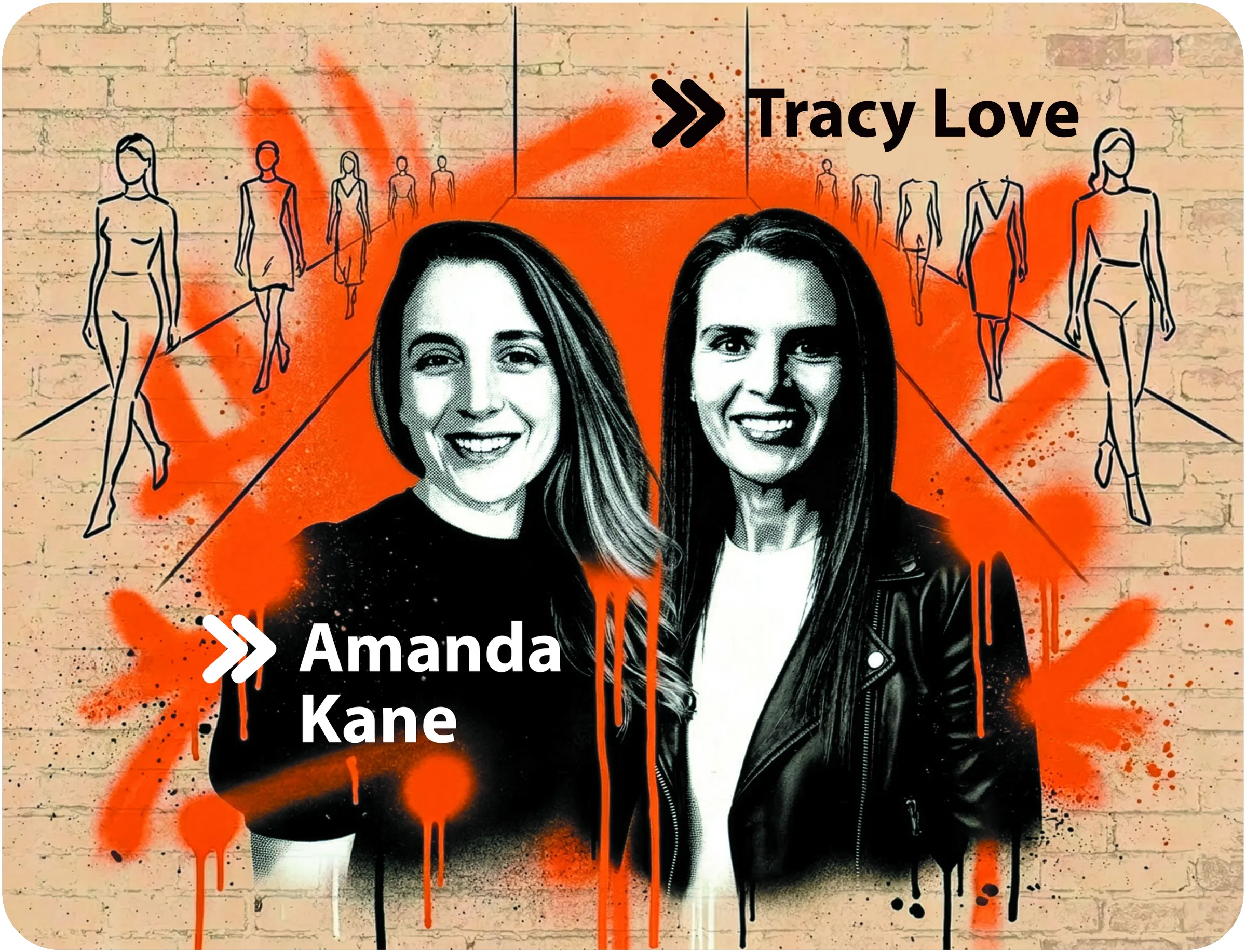
Amanda Kane and Tracy Love on dissolving silos, designing the work, and building a live work table at J.Crew Group.
For most fashion organizations the design process moves in fits and starts. Teams produce work behind closed doors, schedule reviews, send samples to suppliers overseas, and then wait for the next moment of alignment.
Each step is a handover, and each handover is time lost. At J.Crew Group (JCG), Amanda Kane and Tracy Love have been quietly dismantling that pattern for years.
Amanda is SVP of Product Operations and leads operational strategy across the three brands, J.Crew, J.Crew Factory, and Madewell. Tracy is SVP of Enterprise Technology, responsible for the platforms that connect them. Their partnership sits at the intersection of how work happens and how technology enhances it. What they describe is not a tool rollout, but a change in how creativity itself moves through the organization.
“The biggest impact has been the outcome. It’s a change in mindset, as well as a change in the way the work is flowing.” — Amanda
Where the historical model relied on isolated moments of review, JCG has built something closer to a continuous workspace. Designers, merchandisers, sourcing partners, planners, and international suppliers now work inside the same shared environment. Feedback on cost, fit, and creative direction happens in real time rather than in meetings booked weeks apart.
“There is true co-creation,” Amanda explains. “Teams are working in the space and communicating in the space together, in real time, with our international suppliers. Suppliers can be inspired by something and go and make a sample. When they’re physically together, they can review it, and come back with additional suggestions.”
The result is not only speed, but better alignment, better costing conversations, better product, and more creativity, because every contributor can see the work evolve and add to it until the team agrees it is ready.
Process first, technology second
When asked what triggered the change, Amanda is careful to reject the obvious answers. It was not, she insists, a campaign to compress the calendar or save resources. “To me, I would reframe it. It was about eliminating friction and empowering creativity,” she says. “Those are two really critical things.”
Prior to any platform roll out, the work began with team collaboration. Teams started by examining the process, identifying pain points, clarifying roles and responsibilities, mapping critical milestones, and asking what could be removed, accelerated, or added. Only once the process was sharpened did technology enter the picture.
Tracy describes the underlying logic in technical terms. “All problems come back to: is it a people problem, a process problem, or a tech problem?” she says. “We naturally gravitated to the process. Once we had achieved the gains we could there, it came back to this alignment latency problem that Amanda spoke about.”
That phrase, alignment latency, becomes the diagnostic. It names the gap between when a decision is needed and when the right people can converge to make it. In a traditional setup the gap is filled by meetings, decks, and email threads. At JCG it is closed by what Tracy calls a live work table, supported by a collaboration technology designed to reduce and accelerate alignment.
“It’s a live work table that is responsive. It’s flexible and reconfigurable. It is not rigid. The collaboration doesn’t pause between meetings. The work and the discussion are happening in the same space, and it’s shared.” — Tracy
Organic adoption before scale
Perhaps the most counterintuitive aspect was where the change began. It did not start as a corporate initiative, but organically among different teams. Amanda, Tracy, and Brand leaders took notice.
“In pockets within the organization, designers were already leveraging the platform to design their product,” Amanda recalls. “There was an organic adoption of this system. They were already finding platforms and ways to leverage technology to improve the way that they were working. We saw this happening in pockets, and we saw the opportunity to deploy it at scale.”
In parallel, some suppliers, too, had begun adopting the platform. These two streams met in the middle, and the team chose to grow what was already working rather than impose something new.
That choice carries a deep conviction. At JCG, transformation is led by the people doing the work, it is not delivered to them. This distinction is not cosmetic. Top-down rollouts produce compliance. Organic adoption produces commitment.
Trust through transparency
When the conversation turns to AI, Tracy is unequivocal about how it has been positioned inside the company. “AI in this organization has never been positioned as role elimination. This is a superpower to supercharge humans,” she says. “It’s an AI assist, to get to the data faster. What we bring is the strategic lens to say, here in this data is what’s valuable for our organization based on our strategy.”
The result is a workforce that meets new tools with curiosity rather than anxiety. But Tracy points to a deeper mechanism beneath the goodwill: transparency.
“Transparency really built the trust. All of the teams had visibility to the same source of truth and the same data set. There is less trust when there is a gate — a gate where I don’t get visibility to the information until we cross it. In this way, we are working right alongside one another. It has to increase trust.” — Tracy
Amanda agrees and adds a note about how the message is framed. “We keep it grounded in what matters to our teams. We frame it through the lens of how is this going to help you. It really is about amplification, enabling people to do what they do, even better.”
Embedded, not parallel
A common mistake organizations make is treating AI as an adjacent capability that runs alongside the work. JCG designed against that pattern from the start.
“AI doesn’t work in parallel or as a silo or as a thing in and of itself,” Tracy says. “It’s embedded in this process to help us solve problems. All of your insights appear in context. The cost, the colorways, all of the things we use AI for, you see them in the context of the overall product. The work table is centered around the product.”
That principle is crucial. When AI sits outside the workflow, teams must stop, switch tools, interpret outputs, and translate findings back into their main environment. Each switch reintroduces the alignment latency the system is supposed to remove.
Incubate, then scale
The JCG approach to rolling out new ways of working has a distinct rhythm. They do not deploy uniformly across the company. They identify a brand or a function with the appetite to move first, treat that group as their super adopters, and let evidence build before introducing the change elsewhere.
“We’ve been leveraging one brand as our super adopters,” Amanda explains. “They adopt faster, and once they have proven that it works, they give us positive feedback and, at times, negative feedback. We did try to adopt a certain tool, and people didn’t respond favorably. So we went out and found a new one, tested it with that group, and they absolutely loved it.”
The approach has a second benefit Tracy is quick to point out. “The iterative nature of the rollout is also part of it. We’re continuing to enhance the process and the environment. The early adopters have a very different experience than those that are not. The people that are reluctant or skeptical early on actually get a better and different tool by the time they encounter it.”
In other words, lateness is rewarded. The system improves precisely because its first users push it to improve.
What leadership looks like here
Asked what leadership requires in this kind of environment, Tracy doesn't miss a beat. “We initially introduced some things that were met with hesitation,” she says. “As a leader, it’s very important when that happens to acknowledge it and not continue to push forward, saying we are sure and we believe in this solution. If the collective doesn’t believe in the solution, you have to quickly identify that and move on.”
Amanda points to a different but related discipline. “It’s empowering our teams to be close partners with the functions in the organization, and empowering them to go out and find solutions,” she says. “And relationship building. This doesn’t happen without strong partnerships across the org.”
There is a recurring phrase in their conversation: progress, not perfection. “It’s about progress, not perfection,” Amanda says. “Even ten percent better is an improvement. If you set the benchmark that it has to be perfect, people are going to be afraid of failure. You have to champion that this is about change, evolution, and progress. It’s okay if we don’t get it right the first time, but we have to keep trying.”
Workflow, redefined
When the topic of workflow comes up, Tracy reframes it before she answers. The word, she suggests, has been weighed down by old associations.
“It’s not thinking about the steps of the workflow anymore,” she says. “But where are the decisions made? Within this collective space, the collaboration supports that. We don’t operate purely in a, step one, step two, step three model anymore. The steps are the decisions, not the procedural sequence.”
Amanda adds the texture that comes from running a seasonal business. “We’re a retailer, we design on a seasonal basis. There is a seasonal strategy, and there are moments when people come together to talk about critical data sets. Leadership sets a lot of this work in motion. But this platform allows the work to be more fluid, and for iteration to happen outside the guardrails, so you can react to what you’re seeing in the business and not stop and start as much.”
The architecture is still there, with roles, decision rights, and critical milestones remaining explicit. But within those guardrails, the work is no longer a relay race. It is a steady flow.
“The beauty of this system is it’s a blank canvas,” Amanda says. “It is what you make of it. But when you’ve got big teams operating in silos, you can’t just hand it over and say make of it what you want. You do have to give some guardrails and architecture, those critical decision-making moments, rights, and roles and responsibilities.”
There is no done
If there is one phrase that captures the J.Crew Group philosophy, it is the one Tracy returns to repeatedly across the conversation: there is no done.
“There is no done. We’re never done. It will continue to evolve. As we continue to inject new technology and connect it into our systems, what we’re doing today is not what we’ll be doing tomorrow. It’s going to get faster and better and smarter.” — Tracy
That mindset is the new normal, Amanda insists. “Gone are the days of finding one solution, rolling it out, and being good for the next twenty years. We expect that we are constantly going to be finding new ways of working.”
Where to begin
For leaders contemplating the start of such a journey, Amanda and Tracy offer a short list of where to focus.
- Build relationships first. The work cannot be carried by a single function. It requires partnership between operations, technology, brand leadership, and external partners all working in continuous contact.
- Be curious. Go looking for problems to solve, then be curious about how to solve them. Build a network within the organization to advocate for those problems.
- Identify your super adopters. Find the people and brands willing to move first. Let their enthusiasm pull the rest of the organization forward, rather than pushing change down from the top.
- Fail fast, learn faster. Sometimes a tool will be wrong. Acknowledge it, move on, find the next one. Do not protect a solution that the collective has rejected.
- Champion progress. Ten percent better is an improvement. Perfectionism breeds fear of failure. Progress breeds momentum.
Creativity, Amanda concludes, is not generated by the tools. It is amplified by them. “AI is not the inspiration for creativity,” Tracy adds. “Creativity is the inspiration for AI. The inspiration is out in the world. You leverage your tools to amplify it.”