Seven faces of Augmented Collaboration.
Augmented Collaboration in innovation is not driven by a single role, but by a system of complementary perspectives working together. Each profile represents a distinct job-to-be-done, making clear how strategy, execution, exploration, and learning must align to turn ideas into impact. Together, they illustrate that innovation succeeds when diverse roles are intentionally connected, not when they operate in isolation
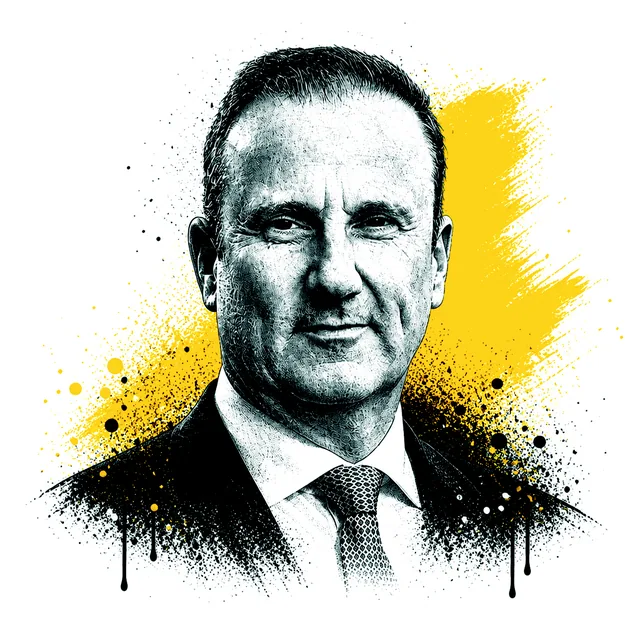
The CEO
Michael Anseeuw
He is CEO and Chairman of the Executive Board at BNP Paribas Fortis, where he leads the bank through a period of transformation shaped by digital innovation and the transition toward a more sustainable economy. He focuses on executing the 2025 strategic plan, driving growth, accessibility, and sustainability while aligning innovation with the evolving needs of customers and society. His approach ensures the bank remains both relevant and forward-looking in a changing financial landscape.
By combining technological progress with human expertise, he strengthens the bank’s resilience and reinforces its role as a trusted partner in supporting economic development and long-term societal progress.
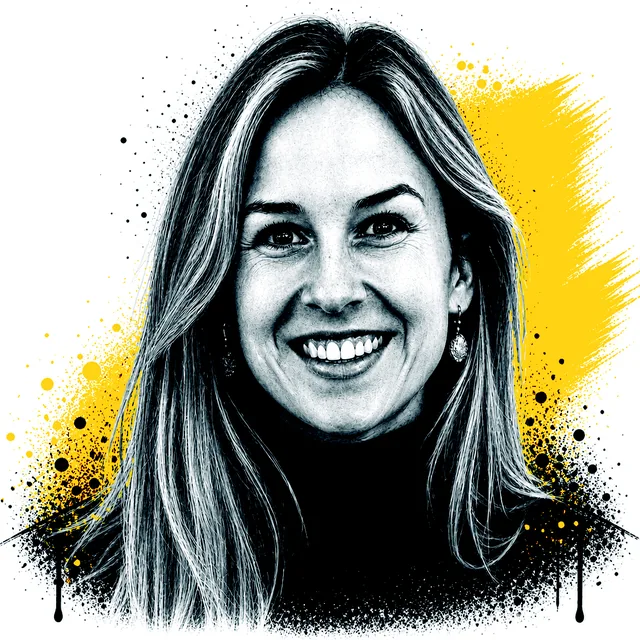
The head of innovation
Moniek Tiel Groenestege
She is Head of Innovation at Dutch Railways (NS), where she leads the team building new solutions for millions of travellers. She brings a background in strategy, business model design, and venture development, with hands-on experience founding and scaling ventures from the ground up.
She believes innovation begins with deeply understanding the system before changing it. Curious by nature and collaborative by instinct, she brings people together across disciplines to move ideas from concept to working prototype.
Her focus is making innovation a lasting capability rather than a one-off effort, connecting bold thinking to commercial reality and creating ventures that excite customers, teams, and stakeholders alike.

The global strategy director
Dominic Tremblay
He is Global Strategy Director at adidas, where he drives strategic direction and execution across digital, e-commerce, tech, and brand functions. He brings a multidisciplinary background translating consumer insights into commercial performance.
He approaches problems with curiosity and a bias toward innovative thinking, finding solutions even in evolving environments. He focuses on simplifying the complexity of large-scale challenges into clear, actionable plans that generate momentum.
By combining strategic thinking with execution, he aligns creativity with discipline, bringing together teams and stakeholders to deliver results.
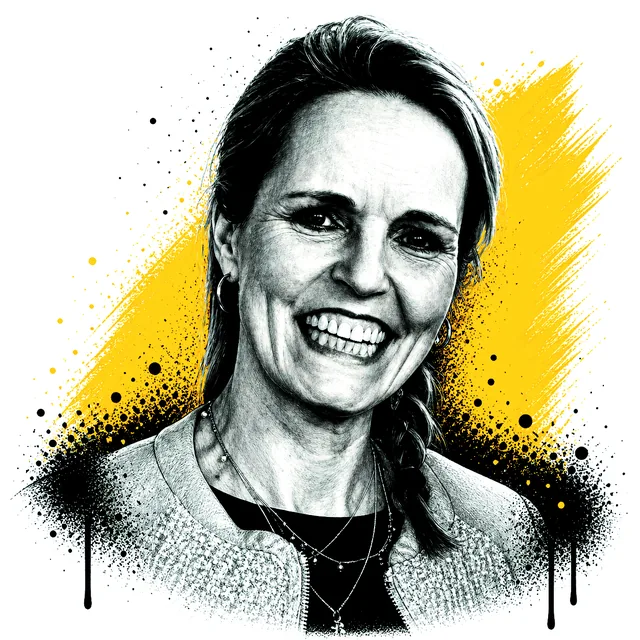
Head of development, innovation and product
Wencke Visser
She is Head of Development at Forbo Flooring Systems, where she leads innovation, R&D, product management, and design, bringing new products from early concept through to scalable, high-quality delivery across global markets.
She focuses on connecting strategy, technology, and execution, translating complex innovation challenges into clear, structured programs that drive measurable results. With strong end-to-end experience, she navigates both the early stages of innovation and the discipline required for delivery.
By bridging teams and aligning functions, she ensures innovation is not just created, but consistently executed with impact across the organisation.
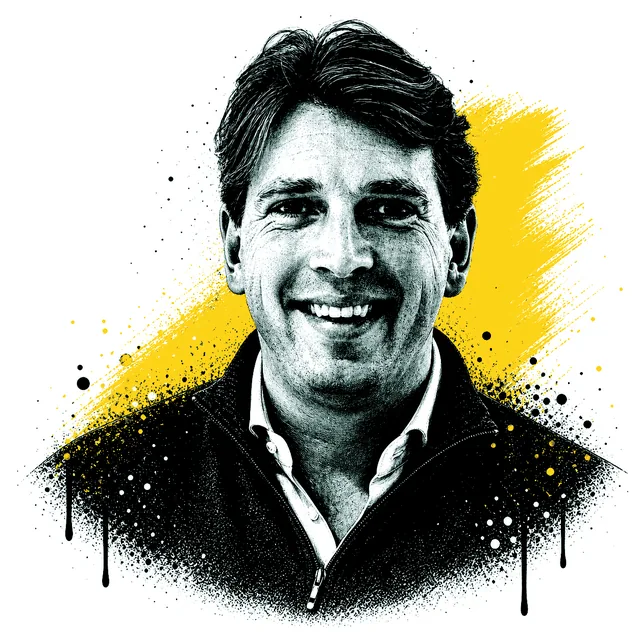
The entrepreneur
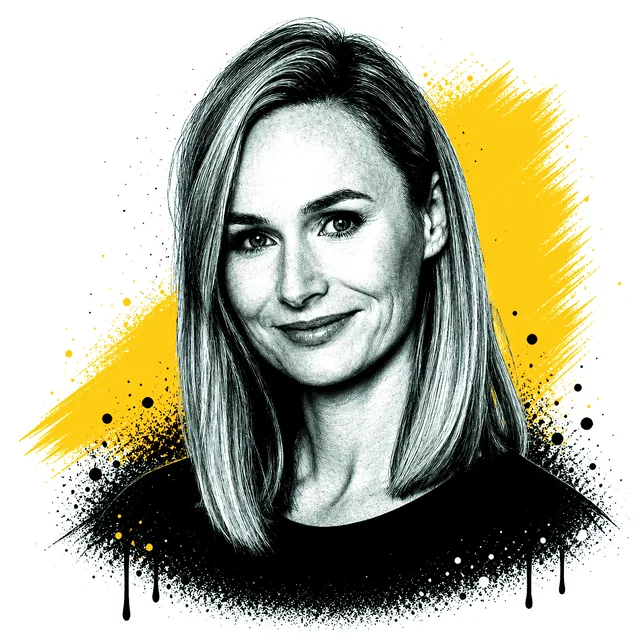
Pieter Zwart
He is the founder and CEO of Coolblue, where he has built one of Europe’s most customer-focused e-commerce businesses. As an entrepreneur, he has grown the company from a start-up into a leading retail platform by prioritising customer experience and operational excellence.
He focuses on combining e-commerce, retail, and marketing to create a seamless and distinctive customer journey. His approach is hands-on and detail-driven, ensuring every part of the business contributes to delivering value and building long-term loyalty. By aligning growth with a strong culture and execution, he has positioned the company as a commercial success and a brand known for simplicity, service, and continuous improvement.
The business designer
Lo Rihvk
She is Partner and CEO at BDA Consulting, where she designs and delivers large-scale programs that help organisations drive innovation, transform ways of working, and create real change.
She combines business development, program design, and project leadership to turn complex ideas into structured, actionable initiatives. Her work spans innovation programs, entrepreneurship initiatives, and strategic projects, all aimed at moving organisations from insight to execution.
By building strong networks, leading multidisciplinary teams, and focusing on practical impact, she ensures innovation is not theoretical but embedded in how organisations operate and grow.
The student
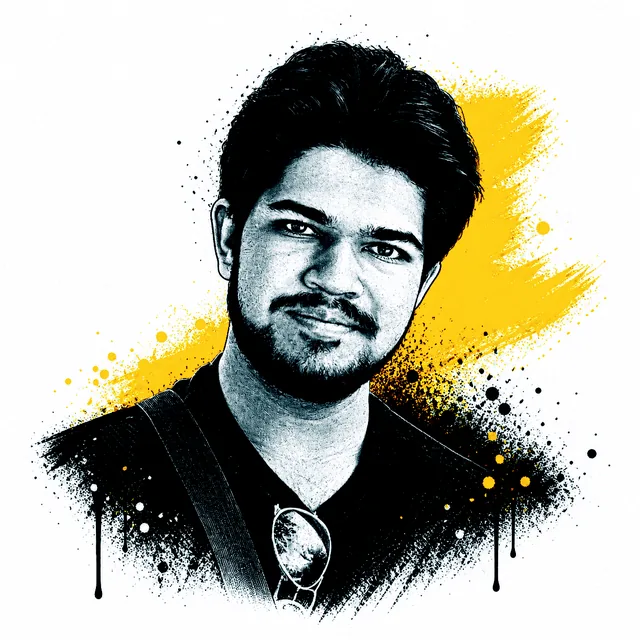
Arjun Prahalad Abhyankar
He is a student at the University of Michigan who explores entrepreneurship and entertainment through both academic study and creative work. Alongside his focus on economics, he actively participates in business and music communities while writing original fiction, music, and his bi-weekly newsletter My Thoughts As Is.
He extends his learning beyond the classroom, including being selected for a Harvard University summer program where he studied intellectual property law and developed ideas aimed at making entrepreneurship more equitable. By combining academic curiosity with creative and entrepreneurial action, he is building a foundation that connects insight to execution as he begins shaping his own path in entrepreneurship.
The team is no longer what you think it is.
Imagine you walk into a team meeting. Ten people are sitting around a table. Laptops are open. Someone is sharing a PowerPoint. Another person is taking notes. Someone else is quietly answering emails. The team discusses the market, reviews customer feedback, looks at last month's numbers and agrees on a list of actions. After the meeting, everyone goes back to their functional roles. Marketing does marketing. Sales does sales. Product does product. Finance does finance. And somewhere in the background, artificial intelligence is waiting to be asked a question.
This is how most organizations are approaching AI. They are adding AI to the existing team model. But that is the wrong starting point. The more important question is: what happens when AI is no longer a tool that the team uses, but intelligence that becomes part of the team?
That changes everything.
The old team model
For more than a century, we have designed work around a remarkably stable formula:
Human team → Tools→ Tasks
We assemble a group of people. We give them roles and responsibilities. We give them tools: email, spreadsheets, documents, presentations, CRM systems, project management software and, increasingly, AI applications. Then we give them tasks. The organization becomes a collection of people performing activities through technology.
This model made sense when human intelligence was the scarce resource. But AI changes the scarcity. Information is no longer scarce. Analysis is becoming less scarce. Content is becoming less scarce. Ideas are becoming less scarce. Even expertise is becoming increasingly accessible.
So the question is no longer "how can we help people do their tasks faster?" It is "how should we redesign the work itself?"
The augmented team
The alternative is an augmented team:
Human team + AI team → Shared context → Workflow → Outcomes
Notice what has changed. AI is no longer positioned outside the team as a piece of software. It has a role. It participates in the workflow. It has access to the relevant context. It performs activities that complement human capabilities. And the team is organized around an outcome rather than a collection of tasks.
We are moving from people using tools to perform tasks, to human and AI intelligence working together through workflows to create outcomes. That may sound like a subtle change. It isn't. It changes how we design teams, jobs, processes, meetings, technology and, ultimately, organizations.
AI has superpowers
The mistake is to think of AI as a digital employee who simply does the same job as a human. AI is different. It has capabilities that humans don't have at the same scale or speed.
| AI superpower | What it does | |
|---|---|---|
| 1 | Sense | Continuously detects patterns, anomalies, trends and signals across enormous amounts of information |
| 2 | Search | Rapidly explores vast knowledge spaces and finds relevant information |
| 3 | Synthesize | Combines fragmented information from different sources into a coherent picture |
| 4 | Generate | Produces ideas, alternatives, drafts, designs, scenarios and recommendations at extraordinary speed |
| 5 | Simulate | Models possible customers, competitors, markets, decisions and futures |
| 6 | Challenge | Acts as a critical thinking partner, questioning assumptions and presenting opposing perspectives |
| 7 | Personalize | Adapts experiences, communication, recommendations and decisions to individual contexts |
| 8 | Automate | Executes repetitive activities and increasingly coordinates entire sequences of work |
| 9 | Monitor | Continuously observes customers, markets, processes and performance |
| 10 | Learn | Captures patterns from interactions and feedback and uses them to improve future performance |
These capabilities are not just productivity features. They represent new forms of organizational intelligence. And that leads to an important design question: where should we put these superpowers to work?
Don't automate humans. Augment the system.
This is where many AI strategies go wrong. They start with the question: "What tasks can we automate?" That is useful, but insufficient. If we optimize individual tasks without redesigning the workflow, we may simply create faster bureaucracy. A faster PowerPoint is still a PowerPoint. A faster meeting can still be a bad meeting. A faster process can still produce the wrong outcome. Speed applied to the wrong system just gets you to the wrong place sooner.
The bigger opportunity is to redesign the system of work. So instead of asking "what can AI do for Sarah?", ask "what could this team achieve if AI intelligence were available throughout the workflow?" The first question makes one person marginally faster. The second one changes what the whole team is capable of delivering. That shift, from individual productivity to collective performance, is one of the most important ideas in augmented collaboration.
Then comes the harder question.
If AI can sense, search, synthesize, generate, simulate, challenge, personalize, automate, monitor and learn, what should humans do? It is the question most organizations quietly avoid, because the honest answer forces them to look at how work is really divided today.
This question is uncomfortable, because many organizations have defined jobs around activities that AI can increasingly perform: research, analysis, writing, reporting, planning, coordination, documentation, basic decision support. Some of the work that used to justify an entire role may become dramatically cheaper. But this doesn't mean humans become less important. It means we need to become much clearer about where human intelligence creates unique value, and honest about where it currently doesn't.
Human superpowers
Humans have a different set of superpowers, and they become more valuable, not less, as AI becomes more capable.
| Human superpower | Why it matters | |
|---|---|---|
| 1 | Judgment | AI can provide options. Humans decide what matters |
| 2 | Empathy | AI can model human behavior. Humans genuinely connect with another human being |
| 3 | Purpose | AI can optimize toward a goal. Humans decide which goals are worth pursuing |
| 4 | Relationships | AI can communicate. Humans build trust, loyalty and commitment |
| 5 | Taste | AI can generate possibilities. Humans recognize meaning, quality, beauty and relevance |
| 6 | Ethical reasoning | AI can identify ethical considerations. Humans must decide what is right |
| 7 | Courage | AI can calculate risk. Humans choose to act despite uncertainty, fear or opposition |
| 8 | Accountability | AI can recommend a decision. Humans must own its consequences |
| 9 | Ambiguity | AI performs best where patterns exist. Humans navigate situations where the problem itself is unclear |
| 10 | Leadership | AI can provide information and alternatives. Humans create direction, meaning and commitment |
The new division of labor
The future team isn't humans OR AI. It isn't even humans WITH AI. It is humans + AI, each doing what they are uniquely good at.
Think about a product innovation team. AI continuously senses market changes. It searches thousands of customer conversations. It synthesizes emerging needs. It generates hundreds of potential product concepts. It simulates how different customer segments might respond. It challenges the team's assumptions. It monitors experiments and learns from the results.
But humans decide: which customer problem actually matters? Which opportunity fits our purpose? What should we build? What would customers trust? What are we willing to stand behind? Which trade-offs are acceptable? When should we stop, and when should we take a risk?
The AI expands the team's intelligence. The humans provide direction, meaning and accountability.
A new formula for the team
AI Superpowers × Human Superpowers × Shared Context × Workflow → Augmented Outcomes
The multiplication signs are intentional. If the AI is powerful but has no context, it produces generic answers. If humans have great judgment but the workflow is broken, they remain trapped in organizational friction. If the workflow is excellent but nobody knows what outcome they are trying to achieve, the system becomes efficient at doing the wrong thing. The magic happens when all the elements come together.
From jobs to contributions
This also changes how we define jobs. Take a market researcher. The traditional job description says: research markets, collect data, analyze trends and prepare reports. AI can increasingly do much of that work. So perhaps the real human contribution is: identify what we need to understand, frame the right questions, interpret what matters, connect insights to strategy and influence the decisions that follow.
Tasks are what you do. Contribution is why your work matters. As AI takes over more tasks, organizations need to get much better at designing around contribution. A job description is essentially a bundle of tasks assigned to a human, and if AI can perform some of them, the bundle becomes unstable.
Instead, we may increasingly design human-AI roles, split explicitly. Human: purpose, judgment, relationships and accountability. AI: research, analysis, generation, monitoring and automation. Shared: learning, decision-making, experimentation and context.
This creates a new question: what is the smallest combination of human and artificial intelligence that reliably produces the outcome? A very different question from "how many people do we need?"
Design the workflow, not just the team
Once you think this way, the unit of organizational design changes. We have traditionally designed departments, then teams, then roles, then tasks. The augmented organization is designed the other way around: start with the outcome, map the workflow required to achieve it, assign AI to the activities where its superpowers create leverage, assign humans to the activities that require human superpowers, and connect both through shared context. This is how an organization moves from AI adoption to organizational redesign.
The leadership challenge
This creates a new responsibility for leaders. The question is no longer simply "how do we get our people to use AI?" It is "how do we redesign our organization for a world in which intelligence is abundant?" The first question can be delegated to a training program. The second one cannot, because it touches the structure of the organization itself.
That requires more than training. It requires leaders to rethink fundamental questions. What work needs to be done? Who, or what, should do it? Where should decisions be made? What context needs to be shared? Which workflows should be redesigned? Which human capabilities should we develop? Where should accountability remain human? And which outcomes actually matter? Eight questions, and not a single one of them is about technology. None of these questions can be answered by buying software. They are design decisions, and they compound: every redesigned workflow makes the next one easier, because the context, the patterns and the confidence carry over. The organizations that answer them deliberately will have better systems of work, and those, unlike tools, are very hard for competitors to copy.
The new team
AI doesn't eliminate the team. It expands the definition of the team. The team of the future may include humans, AI agents, specialized models, data systems, external partners and customers, all connected through shared context and workflows. The question will no longer be "who is on the team?" It will be "what intelligence does the team have access to, and how effectively can it turn that intelligence into outcomes?"
That is the real promise of augmented collaboration. Not humans versus AI. Not humans using AI. But humans and AI working as one system, and that may be the most important organizational design challenge of the AI age.
Seven agents of Augmented Collaboration.
Augmented Collaboration extends beyond people, and it is also shaped by intelligent roles that amplify how innovation happens; each agent represents a specific capability, helping turn signals, insights, ideas, and data into clear action and outcomes. Together, they demonstrate how combining human judgment with AI-driven roles creates faster, smarter, and more connected innovation.

The strategist
Big picture pilot
Focus: Turn signals into direction and the strategist’s Job-to-be-done is to interpret market shifts, competitive moves, and internal performance to guide long-term choices. They must see the full picture: where the market is going, where the business can win, and what to prioritise.
By connecting insights across market, customer, and company, the strategist ensures decisions are forward-looking and coherent. They frame opportunities, clarify trade-offs, and guide teams toward focused bets.
The strategist creates direction and alignment: Reducing noise, sharpening focus, and strengthening strategic choices. They translate complexity into clarity and ensure every move supports a clear path forward.
The user researcher
The empathy engine
Focus: Turn user behavior into clear insight and the user researcher’s Job-to-be-done is to gather signals from users, feedback, and data, and translate them into structured understanding. They must see the full picture: what users are trying to do, where they struggle, and why those problems exist.
By organizing findings from interviews, observations, and usage data, the user researcher ensures teams understand what truly matters. They highlight patterns, clarify needs, and keep decisions grounded in real user evidence.
The user researcher creates clarity and confidence: Reducing assumptions, aligning teams on user reality, and guiding better decisions. They translate behavior into insight and ensure every product move is rooted in real understanding.
The product manager
The value orchestrator
Focus: Turn ideas and inputs into clear product direction and the product manager’s Job-to-be-done is to take scattered insights, requests, and data, and shape them into structured priorities and decisions. They must see the full picture: what users are trying to do, where they get stuck, and which problems to solve now versus later.
By organizing inputs from users, stakeholders, and performance data, the product manager ensures teams work on what matters most. They define priorities, break work into clear steps, and keep the roadmap focused on outcomes.
The product manager creates clarity and momentum: Aligning teams, reducing uncertainty, and keeping progress steady. They translate direction into action and ensure every decision moves the product forward.
The UX/UI designer
The experience architect
Focus: Turn needs into usable solutions and the UX/UI designer’s Job-to-be-done is to translate user insight and product direction into clear, intuitive experiences. They must see the full picture: how users move through a journey, where confusion happens, and how design can remove friction.
By shaping flows, layouts, and interactions, the UX/UI designer ensures solutions are easy to understand and use. They make ideas tangible, test concepts quickly, and refine designs based on feedback and behavior.
The UX/UI designer creates clarity and usability: Aligning intent with experience, reducing friction, and improving how people interact with the product. They translate problems into solutions and ensure every interaction feels simple and effective.
The engineer
The code wizard
Focus: Turn solutions into working products and the engineer’s Job-to-be-done is to translate designs and requirements into reliable, scalable systems. They must see the full picture: how things are built, where risks exist, and how decisions impact performance and maintainability.
By structuring code, selecting technologies, and managing tradeoffs, the engineer ensures solutions work as intended. They break complexity into buildable parts, solve technical challenges, and keep systems stable as they evolve.
The engineer creates reliability and progress: Reducing risk, enabling speed, and ensuring quality. They translate ideas into working reality and ensure every release performs consistently in the real world.
The commercial lead
The sales shark
Focus: Turn product value into revenue and the commercial lead’s Job-to-be-done is to connect what is built to how it performs in the market. They must see the full picture: who the customer is, what they are willing to pay, and how the product drives growth.
By shaping pricing, packaging, and go-to-market approaches, the commercial lead ensures the product is positioned to succeed. They align sales, marketing, and product efforts, and focus on converting value into measurable results.
The commercial lead creates traction and growth: Aligning teams around revenue outcomes, reducing friction in conversion, and strengthening market fit. They translate value into results and ensure the product performs commercially.
The data analyst/growth lead
The growth hacker
Focus: Turn data into measurable growth and the data analyst/growth lead’s Job-to-be-done is to track performance, identify patterns, and uncover opportunities to improve outcomes. They must see the full picture: how users behave, where drop-offs happen, and which actions drive results.
By analysing data across funnels, experiments, and usage, the data analyst/growth lead ensures decisions are backed by evidence. They define metrics, run tests, and highlight what is working and what needs to change.
The data analyst/growth lead creates visibility and momentum: Reducing guesswork, focusing on impact, and accelerating learning. They translate data into action and ensure every improvement leads to measurable growth.