Leadership in the Collaborative Operating System.
In traditional organizational models leadership is often expressed through authority, control, and the steady flow of objectives cascading downward through the hierarchy. Strategy is shaped at the top, translated into targets, and handed to teams who are expected to execute.
Reporting travels upward through layers of interpretation and alignment is monitored through reviews and periodic updates. This model assumes that direction alone can create coherence. In a Collaborative Operating System coherence emerges through different conditions. Transparency replaces opacity, shared visibility replaces fragmented reporting, and structural alignment replaces alignment that depends only on conversation. Leadership does not disappear, it becomes more precise.
From control to clarity
In a visible operating environment leaders cannot rely solely on authority to guide teams because work is already exposed in real time. Hypotheses can be seen clearly, trade-offs appear as they happen, and metrics evolve within the shared space. The role of leadership shifts from controlling execution to clarifying direction. Leaders frame the strategic challenges that matter most, define which customer tensions should receive organizational energy, and articulate what is non-negotiable. They clarify which trade-offs are acceptable and which are not. Clarity becomes the central instrument through which leadership functions. Without clarity transparency produces noise, with it transparency creates momentum. Leaders no longer need to request updates to understand progress because the system already reveals what is happening. Their responsibility becomes to connect metrics with meaning and initiatives with intent, so that learning flows naturally into direction.
Framing strategic challenges
Leadership begins with framing. Leaders determine which Customer Problems truly matter, which assumptions require testing, and which initiatives justify cross-functional coordination. Framing is a structural act. Once a challenge is framed it becomes embedded within shared canvases. Customer Problem statements remain visible throughout the environment; initiatives stay connected to validated tensions, and metrics are interpreted through the lens of that original framing. This prevents drift. Without clear framing initiatives scatter, teams optimize locally, and energy spreads thin. With clear framing teams converge around shared tension. The dominant question therefore shifts from “Who owns this objective?” to “Which customer tension are we resolving?” Leadership establishes that anchor by creating alignment with clarity.
Unblocking instead of micromanaging
In traditional settings leaders often evaluate performance after the fact. Reviews arrive once milestones are met or missed and problems surface only when they become visible. In a Collaborative Operating System friction appears earlier. Cross-functional bottlenecks become visible, dependencies reveal themselves, and gaps between hypotheses and metrics emerge quickly. Leadership shifts from overseeing activity to unblocking flow. Leaders intervene where structural friction appears, clarify mandates, resolve resource conflicts, and protect teams from competing priorities. Since work is visible, intervention becomes precise rather than disruptive. Leadership protects execution instead of hovering over it.
Protecting focus in high-visibility systems
High visibility increases cognitive demand because everything can appear urgent. Leadership protects focus by reinforcing the original tension and strategic framing. Not every idea deserves to become an initiative, not every metric shift requires action, and not every opportunity fits the strategic direction. Focus is not restriction, it is coherence within complexity. Protecting focus becomes one of leadership's most essential responsibilities.
Cultivating community in transparent environments
A Collaborative Operating System connects work structurally, while leadership connects people socially. When reasoning becomes visible vulnerability increases because assumptions are exposed, incomplete thinking is recorded, and trade-offs are discussed openly. Without psychological safety transparency becomes threatening. Leadership builds community by modeling openness, valuing disciplined iteration over polished perfection, and encouraging public reasoning instead of private positioning. Community turns visibility into trust and trust strengthens collaboration, which sustains innovation.
Leadership as meaning-making
The system provides visibility and alignment. Leadership provides meaning: Metrics do not interpret themselves and dashboards do not define priorities; leaders connect evidence to narrative. When metrics shift they ask what the change means for the customer tension they committed to solve, which hypothesis must be revised, and what learning has emerged. Leadership becomes the interpretive layer that turns visibility into direction.
From status collection to directional stewardship
In traditional models leaders collect status and interpret summaries. In a Collaborative System leaders operate within the same environment as their teams. They engage with primary context which reduces distortion, minimizes political interpretation, and lowers decision latency. Leadership moves from asking what happened to deciding what matters next. This shift transforms leadership from administrative oversight into directional stewardship.
Ways of working as the bridge
Leadership in a Collaborative Operating System is not defined by charisma or control but by structural stewardship. Leaders frame challenges, provide clarity, unblock teams, protect focus, and cultivate community. Ways of working become the link between vision and execution, and leadership ensures that link remains strong. When leadership and system reinforce one another, innovation becomes sustained rather than episodic. It is no longer about commanding from above but about shaping clarity within shared visibility.
The three shifts in leadership.
Contact with yourself.
The most uncomfortable realization arrives slowly, and with more resistance than expected. The uncertainty in the organization is not caused by an absence of vision or a shortage of ideas about where to move. The deeper cause sits somewhere less flattering: the desire to be fair, loyal and generous has quietly replaced the need to be clear. Good intentions have taken the place of leadership discipline. The intention is familiar and well meant: create an environment where people feel appreciated, supported and comfortable, avoid unnecessary tension, keep collaboration positive rather than confrontational. Admirable motivations, and in many situations the right ones. But generosity without boundaries eventually produces dependency, and loyalty without clarity produces a confusion that spreads through the organization.
When a leader is not fully in contact with what must actually happen next, the organization senses the absence almost immediately. People are remarkably sensitive to subtle signals of uncertainty. When direction stays implicit, they fill the open space themselves: interpreting intentions, adjusting their own priorities, waiting to see what will eventually become important. Some turn cautious, some opportunistic, but nearly everyone slows down. Waiting becomes the dominant behavior, and waiting quietly erodes momentum, because energy dissipates whenever people are unsure what truly matters.
Leadership therefore begins with a confrontation that feels surprisingly personal. The essential questions are not strategic frameworks or analytical exercises but a direct inquiry into intention:
- What must actually happen here?
- What outcome must exist nine months from now?
- What behaviors can no longer remain in this organization?
Answered honestly, those questions change what leadership is: no longer an attempt to maintain harmony, but an act of responsibility toward the organization's future.
And clarity does not create aggression, nor does it require rigidity. Clarity creates orientation. The moment expectations, outcomes and timelines become explicit, conversations change character: discussions sharpen, priorities become visible, and people react to the new level of definition. Some lean forward with renewed energy; others reveal resistance that had stayed hidden. That resistance is uncomfortable, and it is usually a sign that something meaningful has shifted, because ambiguity rarely provokes resistance and clarity almost always does. True leadership begins the moment polite ambiguity is replaced by visible intention.
Contact with the customer.
The second shift emerges from contact with the customer, a concept that sounds obvious and is frequently misunderstood. Organizations speak enthusiastically about customer centricity and invest real effort in personas, journey maps and behavioral data. These tools offer structure and perspective, but they create distance the moment they start replacing direct exposure to real customer behavior. Headquarters converts messy human experience into simplified representations, while the frontline keeps encountering the hesitation, doubt and friction that no model captures and no slide summarizes.
Innovation loses vitality whenever the distance between decision makers and customers grows too large. A leader who has never heard the hesitation in a client's voice, never watched a buyer pause before committing, never witnessed a process fail in front of a frustrated user, is solving a problem that has become abstract. Abstract problems invite elegant solutions that work in presentations and collapse on contact with real life. The organization believes it is innovating; often it is refining its own assumptions, not addressing a lived problem.
Direct contact is rarely convenient. It takes time that feels scarce, disrupts routines, and pulls leaders out of the environments where their authority and expertise feel secure. Yet proximity changes the quality of understanding in a way analysis cannot replicate. When a problem can be observed directly, when someone can point at a specific moment and say this is where the friction happens, innovation gains a concrete starting point, and discussion is anchored in reality rather than speculation.
AI can find patterns across large datasets and surface correlations no human would spot, but it cannot replace what happens when people witness a real struggle unfold in front of them. Data can show that customers abandon a process at a certain step; only direct observation reveals the hesitation, confusion or emotional friction that explains why. Innovation becomes meaningful only when abstraction gives way to proximity.
Contact with your team.
The third shift is contact with the system itself. Innovation is often described as a product or technology exercise; in reality it is system work. Every new solution eventually touches multiple parts of the organization, each carrying its own perspective: R&D understands technical possibility, sales knows customer motivation, finance evaluates economic risk, and operations knows the constraints that decide whether an idea can function at scale.
When innovation develops in an isolated corner, those perspectives stay absent until late in the process, and then the broader system reacts defensively, because the proposed solution threatens realities that were never considered during development. The organization does not reject the idea out of hostility but out of necessity: the proposal arrives without the structural insight needed to integrate it.
A different operating model becomes necessary if innovation is expected to survive contact with reality. Everyone who influences the outcome must help shape it, and their contribution cannot be a symbolic gesture or a polite approval after the decisions are made. Meaningful participation means opinions, data, constraints and objections that change the direction of the work itself. Effective innovation systems encourage exactly those contributions:
- Perspectives that reveal hidden assumptions
- Data that clarifies uncertainty
- Operational constraints that highlight feasibility
Participation also requires a voice. Silence inside an innovation process weakens collective reasoning, because unspoken concerns stay invisible until they return later as resistance. Personality labels, hierarchy or inexperience cannot justify the absence of contribution: everyone operating in the system holds information others may not see, and that information only becomes valuable when it is said out loud.
Discipline completes the system. Innovation cannot remain an endless exploration without concrete outcomes: timelines must exist, decisions must be made, and the intended direction must be visible before experimentation begins. Experiments move toward the market within a defined timeframe while the existing organization keeps functioning reliably around them. That balance between exploration and stability is not a matter of ambition. It is a matter of discipline.
AI fluency is the fun part.
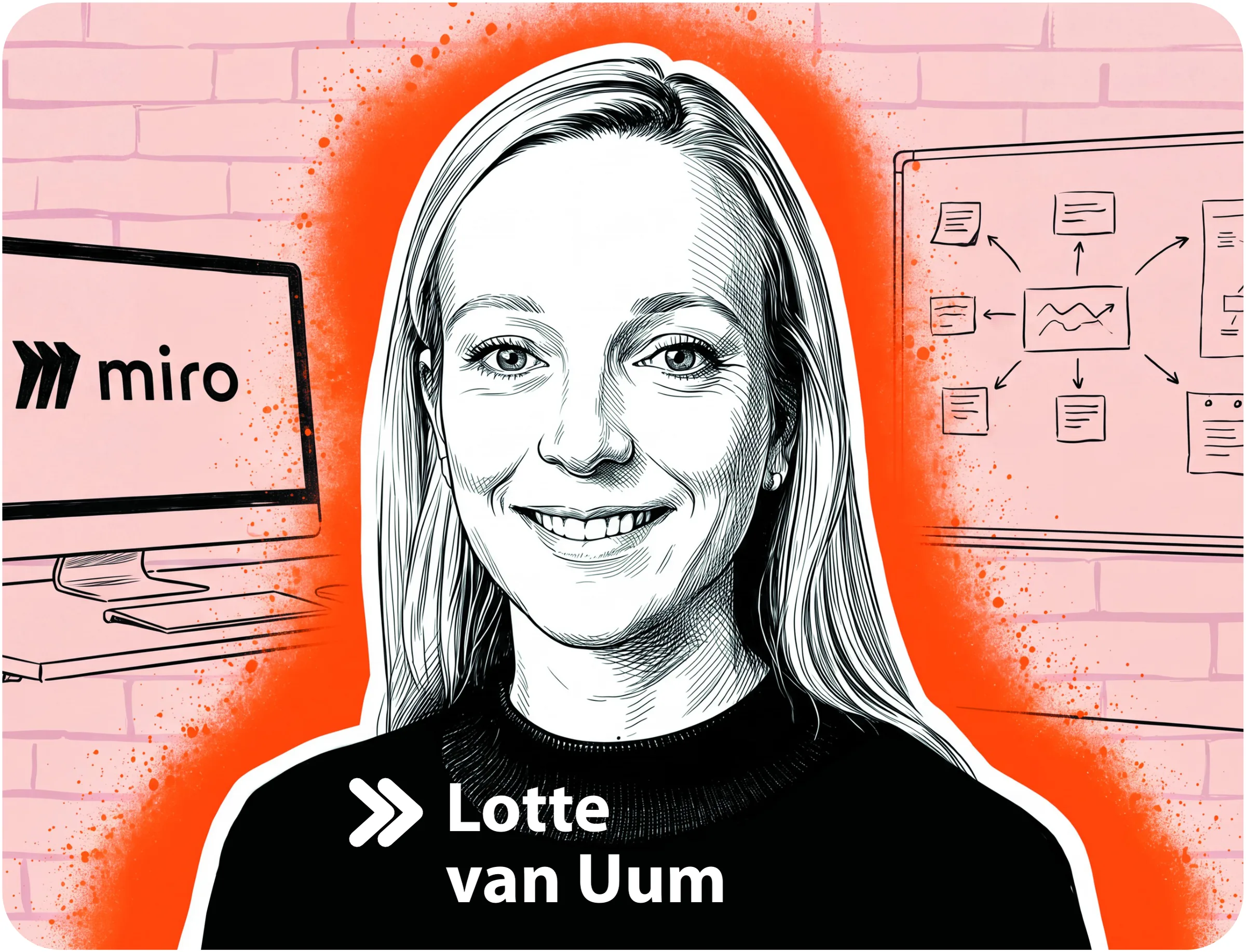
Why bottom-up AI transformation only gets you halfway there.
There is a pattern anyone who ran large transformations a decade ago will recognize, and Lotte van Uum, who spent years at BCG on agileat-scale before joining Miro, watched it play out again and again. The rollout moved team by team, and for a while it looked like exactly the right approach: enthusiasm spiked, velocity climbed, teams found a rhythm. Then, around nine months in, it flattened out. The teams had done their job; they had simply run into the edges of what they alone had the authority to change. She is now watching the same shape repeat with AI, inside her own company included, and the déjà vu is useful, because it reframes what looks like failure. A stalled rollout is not a crisis, and it is not evidence that anyone did it wrong. It is a phase ending roughly on schedule.
The beginning, she says, does not need overthinking. At Miro it meant giving people the tools and unlimited credits, encouraging a handful of technical colleagues to go first in public, and getting out of the way. With AI the use-cases are not obvious, and the same technology means different things to different teams, which makes bottom-up the only place to begin. Within weeks, engineers were shipping pull requests written mostly with AI and product managers were prototyping features the same afternoon they had the idea, none of it mandated. Nor is that one company's quirk: MIT researchers found employees at more than 90% of companies using personal AI tools at work, pilots or not. Give people access and a reason, and they find uses faster than any committee could specify them.
The same research found something less comfortable: 95% of enterprise AI pilots showed no measurable financial impact. MIT called it a learning gap, the slow, unglamorous work of integrating AI into how a company runs, as distinct from how individuals use it. The ceiling is not effort or enthusiasm. It is architectural, and it shows up in the same three shapes everywhere: the workflow someone wants to rebuild crosses three teams and none can change how the others work; the process ripe for automation has many stakeholders and no one with authority to redesign it; and the metric that would prove the new way better does not exist yet, so the old way wins by default. None of that is a verdict on the people trying. It is what happens when individuals are asked to solve a company-level problem they are simply not in a position to solve.
Bottom-up and top-down get discussed as competing philosophies, something to pick a side on and defend, but Lotte argues they are not rivals at all. They are two acts in the same transformation, and each does something the other structurally cannot. Bottom-up builds fluency and trust, the part where people learn what the tools can actually do. Only top-down can change the roles, processes, governance, cadences, and the metrics that actually get rewarded, and it only works if the fluency already exists. A mandate parachuted onto a workforce without fluency fails for the mirror-image reason bottom-up caps out: there is nothing there yet to organize. At a recent keynote she said, half-joking, what felt like the least popular sentence in the room: honestly, at some point this just needs a PMO. The people who run transformations for a living smiled, because they had landed in the same place themselves.
What comes next she describes as direction rather than result, because the work is still mid-way. When a workforce with real fluency meets an operating model rebuilt to catch it, the first phase's wins start to compound: one engineer's gain, multiplied across a team with the authority and shared context to act on it together, and a shared, queryable view of how the work actually gets done, so gains in one corner stop staying siloed. It is the oldest shape in transformation: first energy, then a plateau, then the harder structural work, and then, done right, something that compounds. If an AI rollout has hit a wall recently, that does not mean it was done wrong. It might mean it is right on schedule.
Clarity, courage, and the discipline of leadership.
Innovation systems rarely fail for lack of intelligence, ambition or creativity. The cause usually lies elsewhere: innovation slows when leadership hesitates to introduce the clarity and discipline required to move forward. Frameworks, tools and technologies can support the work, but they cannot compensate for leadership that stays hesitant or ambiguous.
Within an innovation system, leadership determines whether the organization moves with direction or drifts in uncertainty. Leaders shape how priorities are interpreted, how decisions are made, and how teams respond to ambiguity. When direction stays unclear, people interpret the situation independently, and the result is fragmentation: teams work hard, but their efforts no longer converge on a shared outcome. When leadership introduces clarity, the opposite dynamic emerges. Expectations become visible, decisions gain momentum, and collaboration aligns around a defined objective. Innovation does not become easier, but it becomes possible, because the organization operates with shared orientation. Innovation capability is not a reflection of the tools an organization uses but of the discipline its leaders bring to the system they are shaping.
The hard part: overgiving.
One of the most difficult leadership patterns to recognize is the tendency to give too much. It appears in organizations that genuinely care about their people: leaders want to remove obstacles, help when needed, and make sure employees feel appreciated and protected. Yet generosity can weaken the very system it aims to strengthen. When leaders consistently solve problems for their teams, the initiative that drives progress disappears. When comfort becomes the dominant principle of management, the willingness to stretch beyond familiar routines declines.
Responsibility drifts away from individuals and back toward leadership, and a subtle dependency forms. What first looks like supportive leadership becomes destabilizing: when expectations stay flexible, when compensation detaches from contribution, and when commitments carry no reciprocal accountability, the organization does not grow stronger. A culture of passive participation emerges.
Clarity, in contrast, activates people. When expectations are explicit and responsibilities defined, individuals must respond to the situation leadership has created, and stronger systems produce three observable responses: some accelerate and embrace ownership, some resist because the shift challenges established habits, and some ultimately choose to leave. None of these are signs of leadership failure. They are the natural consequences of restoring alignment between responsibility and performance. Innovation requires momentum, and momentum rarely emerges where expectations remain negotiable. Progress almost always introduces friction, and that friction is not a problem to eliminate but a sign the organization is beginning to move. For movement to occur, leadership must take a clear position.
Resistance is not failure.
The moment leaders move from seeking approval to providing clarity, the atmosphere changes. Comfortable conversations become intense, questions grow sharper, and colleagues test whether the new direction is temporary or genuine. This is often misread as resistance to leadership; in reality, people are testing the stability of the system. Organizations learn quickly from behavior. If leaders retreat at the first sign of tension, the system concludes that clarity is negotiable, old patterns of ambiguity return, and momentum disappears almost immediately. When leaders hold their position and keep articulating the same direction despite the discomfort, the organization begins to reorganize around the new clarity: priorities sharpen, responsibilities clarify, and collaboration adjusts to the new expectations. Innovation does not require the absence of tension. A certain level of productive tension is essential to move beyond established routines: comfort protects the present, while tension invites the organization to build the future.
AI and the new leader.
AI adds a new dimension to leadership responsibility. As it accelerates analysis and automates routine work, organizations gain unprecedented access to information and capacity for rapid decisions, which raises a profound question: what should be done with the time and cognitive capacity AI creates? If the added capacity merely produces more reporting, more alignment meetings, or a flood of digital communication, nothing fundamental improves. The real opportunity is to reinvest that time in the human elements of innovation: reflecting on strategic direction, staying in contact with customers and real market behavior, holding meaningful cross-organizational conversations, and making decisive choices when ambiguity appears.
The leader's role does not shrink in an AI-enabled organization; it becomes more visible. Effective leaders stay present where decisions and learning actually happen, acknowledge uncertainty without losing direction, and articulate a path forward even when not every detail is known. A leader in an AI-driven organization can say, with humility and conviction, "I do not yet know exactly how we will get there, but this is the direction we must explore." Such leaders actively seek feedback, recognize the limits of their own perspective, and invite others to contribute insights that strengthen the system. Innovation cannot be reduced to tools or methods; it reflects the maturity of the leadership behind it.
Leadership requires bravery.
Ultimately, innovation demands something no framework or technology can provide: courage.
Leaders must define direction before uncertainty is resolved. They must articulate expectations clearly, even when doing so introduces tension into established relationships. They must stay close to reality, confronting uncomfortable truths about customers, systems and capabilities. And they must accept that not everyone will move at the same pace: some will embrace the chance to build something new, others will hesitate, and some will stay inside the comfort of existing routines. Leadership means accepting those reactions without abandoning the direction innovation demands.
When leaders hesitate to stand behind their intentions, the system weakens: direction becomes negotiable, energy disperses, and decisions slow as uncertainty spreads. When they hold their position with clarity and consistency, the opposite happens: direction becomes visible, energy aligns, and decisions accelerate because people understand what the organization is trying to achieve. Over time the system grows stronger, and innovation stops being a temporary initiative and becomes the natural consequence of leadership that provides direction, accepts tension, and guides the organization toward a future that does not yet fully exist.
Leadership is an activity, not a role.
Steve Mostyn on innovation, adaptive work, and the courage to ask better questions.
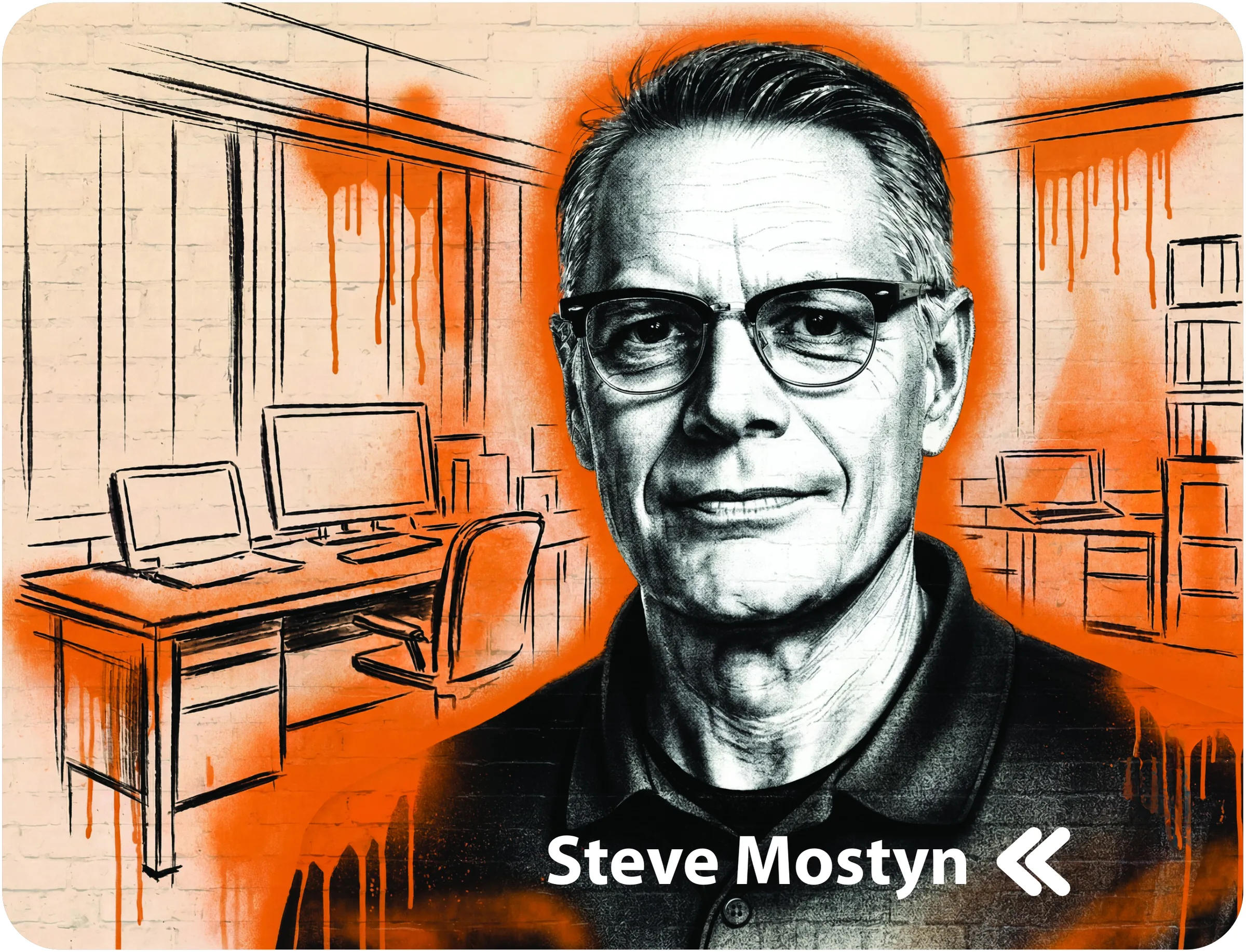
Innovation is often described as a strategy, a department, or a capability. But according to Steve Mostyn innovation is none of those things first. The Leadership educator, Oxford Associate Fellow and author of Why Great Leaders Ask Great Questions, has a different perspective:
“It's adaptive work,” he says. “And adaptive work requires leadership.”
Not leadership as a title. Not leadership as a hierarchy. But leadership as an activity. In a wide-ranging conversation, Mostyn explains why innovation fails when organizations misunderstand both leadership and the nature of change itself, and what leaders must do differently.
Leadership is what you do, not what you are
Mostyn is clear: Leadership does not belong to a role.
“Authority gives you permission to maintain order,” he explains. “Leadership is the activity of mobilising people to face difficult realities and adapt.”
The distinction matters. Many organizations assume innovation is the responsibility of senior executives or innovation teams. But innovation requires distributed leadership: People at multiple levels stepping forward to name uncomfortable truths, challenge assumptions, and experiment with new ways of working.
“You can sit in a powerful position and avoid leadership entirely,” Mostyn says. “And you can exercise leadership without any formal authority at all.”
When innovation is treated as a technical task rather than an adaptive challenge, organizations design solutions that look impressive but fail to take root. Real innovation requires behavioural shifts, mindset changes, and sometimes the loss of familiar competence. That work cannot be mandated. It must be led collectively.
The truth about innovation: It involves loss
One of the most overlooked dimensions of innovation, Mostyn argues, is that it entails loss.
“Every meaningful innovation threatens something,” he says. “Established expertise. Revenue Models. Status. Certainty.”
When organizations fail to acknowledge this, resistance emerges quietly. Leaders mistake reluctance for inertia or incompetence, when in fact people are grieving what may need to change.
This is where leadership must provide three stabilising forces:
- Protection: Enough psychological and structural safety for people to experiment.
- Direction: Clarity about the adaptive challenge, not vague ambition.
- Order: Sufficient stability so the organization does not feel chaotic.
“Innovation is not about avoiding the discomfort,” Mostyn emphasises. “It's about regulating it.”
Too little tension, and nothing changes. Too much, and the system shuts down. Leadership is the art of holding the heat at a productive level.
Three steps to leading innovation
When asked how leaders can take on complex innovation challenges more effectively, Mostyn outlines a disciplined, three-step approach.
Frame the challenge
The first task is diagnosis. Often people jump straight into the work without spending time on understanding what is really going on.
Mostyn encourages leaders to ask three deceptively simple questions:
- What's going on?
- What else is going on?
- What is really going on?
The first question surfaces the dominant narrative. The second exposes competing dynamics and hidden tensions. The third reveals the adaptive core: The uncomfortable truth beneath surface explanations.
“Most organizations stop too early,” he notes. “They treat adaptive challenges as technical problems. That's when innovation efforts stall.” Without proper framing, energy is directed toward symptoms rather than root causes.
Decide who belongs on the balcony, and who on the dancefloor Mostyn draws on a powerful metaphor: The dancefloor and the balcony (described by Ron Heifetz and Marty Linsky). The dancefloor represents the operational reality where emotions, politics, and pressures are felt. The balcony provides perspective where patterns, relationships, and systemic forces become visible.
“Innovation leadership requires movement between both,” he explains.
Leaders must ask:
- Who needs the systemic view from the balcony?
- Who needs to experiment on the dancefloor?
- Who holds influence, formally or informally?
- Where are the critical networks?
Innovation is never a solo act: It is network work. Coalitions must be built, informal influencers must be engaged, and communities must be mobilised.
“You don't disrupt alone,” Mostyn says. “You do it with a community.”
Give the work back to the people
Perhaps the most counterintuitive step is the final one.
“Leaders often assume the problem is theirs to solve,” Mostyn observes. “But adaptive challenges cannot be solved for people. They must be solved by them.” If leaders absorb the responsibility, they create dependency. If they return it to the organization, they build capacity. Giving the work back does not mean withdrawing. It means continuing to frame the challenge, regulate the tension, and support experimentation. All while ensuring the ownership of change remains distributed.
“It is not your work,” he says. “It belongs to the system.”
Asking better questions
At the heart of Mostyn's philosophy lies the practice of inquiry. His book, Why Great Leaders Ask Great Questions, argues that leadership begins not with decisive statements, but with disciplined reflection.
The quality of the questions shapes the quality of adaptation:
- What are we protecting?
- What are we avoiding?
- What must we preserve?
- What must we let go?
“Innovation rarely fails because of a lack of talent,” Mostyn concludes. “It fails because organizations lack adaptive leadership.”
Leadership, in this view, is neither heroic nor theatrical. It is steady, relational, and often uncomfortable work. It requires courage. Not to have the answers, but to surface the right questions.
And it begins not with a title, but with action.
The discovery mindset.
Designing experiences that transform engagement.
Sid van Wijk is a pioneer of discovery experiences, turning engagement into powerful moments of insight and connection.
Discovery is not something that happens to us, it's something we actively create. It is the condition for being able to gain insights and learn.
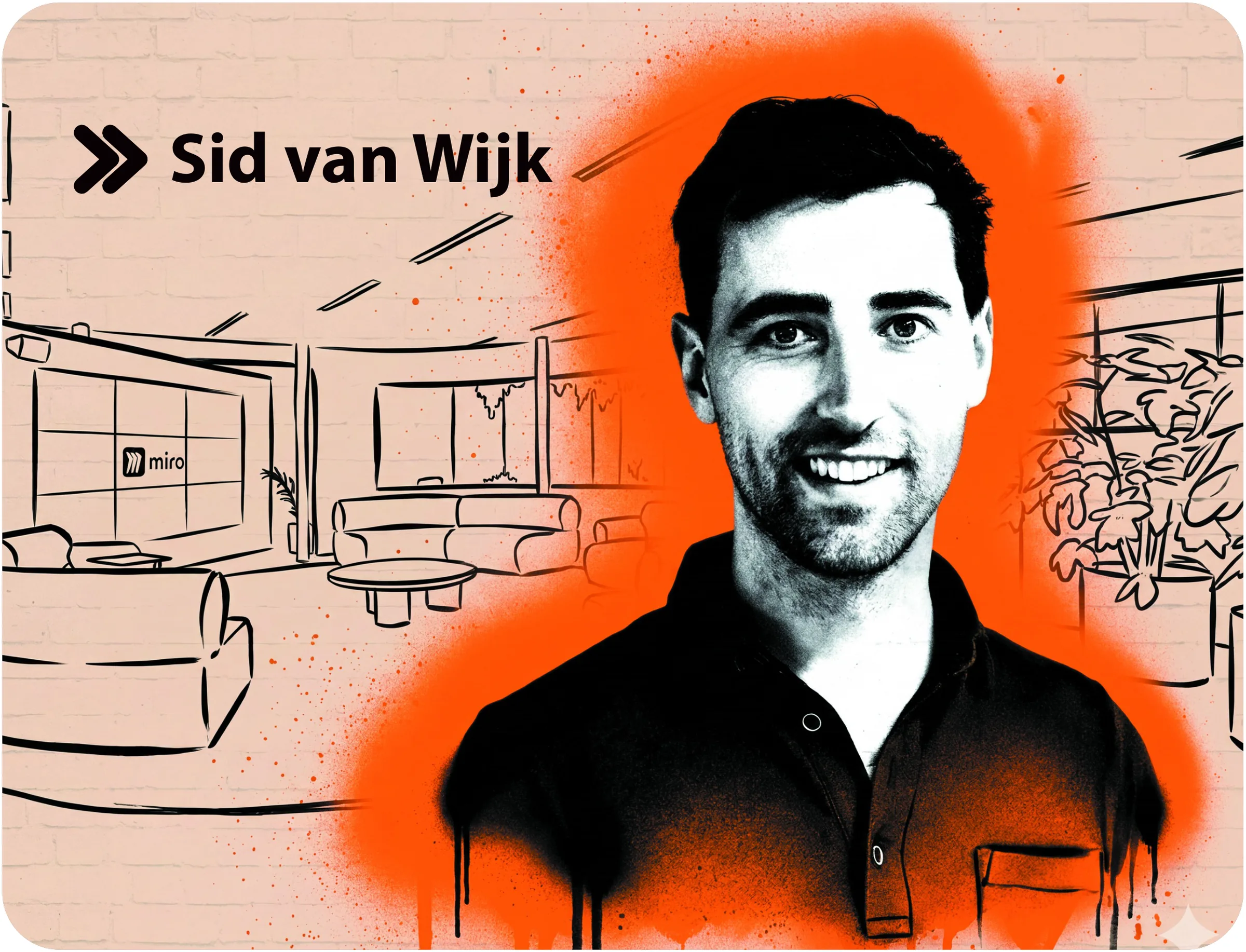
When organizations shift from presenting information to facilitating mutual exploration, they transform one-directional transactions into collaborative journeys. This chapter explores the philosophy and design principles behind creating genuine discovery experiences, drawing from the practice of transforming executive briefing programs into spaces where all participants become explorers together.
The power of language and show, don't tell
The words we choose shape the experiences we create. 'Briefing' carries military overtones; hierarchical, one-sided, delivering information from expert to recipient. It closes minds rather than opening them. Discovery creates an entirely different expectation. It signals a journey where both sides explore together, where everyone has something to uncover. When participants arrive with a discovery mindset, they actively look for insights rather than passively receiving content. This shift in language becomes self-fulfilling: People who come to discover will discover.
The question "What did you discover?" feels personal and friendly. Each participant can have their own answer because everyone's on their own exploration, even when traveling together.
The five design principles Three rooms: Movement creates memory
Long engagements cannot happen in static spaces. Physical movement between locations generates energy, sparks creativity, and enhances memorability. When we walk, we trigger conversation. When we see new things, we think differently.
The journey becomes literal, participants experience progression through space, which mirrors the progression of ideas. Visual thinking dominates human cognition. Even something as simple as seeing others' reactions shapes what we say next and whether we continue. This is why for example dining in complete darkness makes conversation difficult: We lose the visual feedback that guides genuine exchange.
Three types of sessions: Multiple learning modes People absorb information differently. Some learn by doing, others by watching, still others through discussion. A discovery experience must mix formats: Hands-on experiences, product demonstrations, presentations, unstructured discussions, fireside conversations, tours, and collaborative work sessions.
This variety serves another purpose beyond accommodation, it maintains engagement and creativity throughout extended sessions. The rhythm of alternating between interactive and reflective, between structured and open, between digital and analog creates natural breathing room for ideas to develop.
Customer experience equals employee experience: Radical authenticity Nothing signals authenticity more powerfully than shared reality. Standing in the same coffee line. Eating in the same cafeteria. Working with the same tools, in the same spaces. When participants experience the actual work environment rather than a sanitized showcase, they meet the real organization. This extends to content: Marketing-polished presentations create distance, while rough, purpose-built materials signal "we made this for you, right now."
This principle of 'Ugly Ducklings', deliberately showing work in progress, accomplishes two things. First, it demonstrates authenticity and customization. Second, it invites participation. Polished content intimidates people from contributing because they fear breaking something carefully crafted. Rough content invites feedback and co-creation. The more unfinished the work, the more easily participants pick up a pen and join in.
Meeting equity: Designing for hybrid reality Remote participation often creates second-class experiences. The person dialing in feels like an afterthought, experiencing content designed for those physically present.
The 'Rule of Two' addresses this: Two facilitators, two screens, two agendas. One facilitator focuses exclusively on remote participants, ensuring their voice carries equal weight, while dual screens ensure remote participants see everything in-person attendees see. The goal: Regardless of location, everyone flies first class.
Flexibility by design: Over-prepare, then listen The paradox of great discovery experiences is that they require extensive preparation but succeed through adaptation. The mantra is "over-prepare but go with the flow."
Rigid, time-boxed agendas stop listening. When facilitators mentally rehearse their next scripted question, they cannot truly hear responses or notice where energy wants to go. Prepare extensively: Know your content deeply, understand what's possible, have multiple options ready. But make sure to hold it all loosely enough to follow what emerges.
The voice of the customer: Opening ritual
Every discovery journey begins the same way. An unstructured, one-hour conversation asking why participants came, what they want to accomplish, what success looks like, what matters most to them. This session serves multiple purposes. It demonstrates genuine listening. It ensures alignment on direction and expectations. It provides information to adapt everything that follows. Most importantly, it establishes the tone: We're here to discover together, and your voice shapes this journey.
The opening hour pairs with a closing session called "the art of the possible", deliberately left blank on the agenda. This final session gets filled in based on what was learned throughout the day, proving that listening happened and demonstrating responsive iteration in real-time. Participants consistently rate this closing session as most relevant because it emerged from their actual needs and questions rather than predetermined assumptions.
The art of 'Ugly Ducklings'
The rougher the content, the more real it looks. Unpolished slides signal "I made this for you", not for marketing approval. Whiteboard drawings start from scratch, setting a tempo that invites participation.
When content is too perfect, customers won't touch it. They don't want to destroy something beautiful. But rough edges invite contribution. When someone picks up a marker and starts drawing on your whiteboard, that session is winning. That's collaboration happening in real-time.
This is the 'Ugly Duckling' philosophy: Bring your rough drafts, your works-in-progress. Let customers see the real Miro, not a polished facade.
The three highs formula Discovery experiences targeting senior decision-makers follow a simple equation:
'High touch' + 'High stakes' = 'High fives'.
'High Touch' describes the method: Immersive, personal, face-to-face engagement with careful attention to every detail and transition. 'High Stakes' describes the participants: Executives and decision-makers who can meaningfully act on insights, who influence organizational direction, whose engagement truly matters.
'High Fives' represent the outcome: Not literal high-fives but the energy shift when trust forms and alignment happens. A high-five is inherently in-person, embodying the kind of human connection these experiences create.
Core values made visible
Abstract values gain meaning through consistent practice. Four values animate genuine discovery:
Iteration appears in the living lab concept. The ability to move furniture, change room configurations, adapt agendas mid-stream based on participant input. When someone shares feedback and immediately sees it incorporated, iteration becomes tangible.
Collaboration takes many forms throughout the journey. Unstructured discussion is collaboration. Working together on whiteboards is collaboration. Peer-to-peer conversations between customer and employee doing similar work is collaboration. The variety demonstrates that collaboration isn't a single activity but a way of being together.
Empathy manifests in listening programs, in creating safe spaces for honest sharing, in the soft landing of hospitality and humor that helps people open up, in relationships valued over transactions. Impact shows up in the focus on high-stakes participants whose decisions matter, in outcomes that genuinely influence direction, in treating these engagements as innovation programs where customer insights can shape product roadmaps.
The in-person paradox
Here's the irony: A platform, like Miro, built to enable remote collaboration maintains one of the most committed in-person engagement programs in the industry. Customers often laugh at this contradiction, the tool that helps teams work remotely requires face-to-face discovery.
But there is no contradiction. Visual communication dominates human interaction. Seeing someone's reaction to your words shapes what you say next. Reading the room, feeling energy shift, watching interest spark across someone's face; these non-verbal signals guide conversation in ways video calls cannot replicate.
Remote collaboration tools succeed because they approximate in-person work. Discovery requires the real thing: Humans in space together, building relationships, reading subtle cues, experiencing shared presence. The platform enables the 99% of work that happens afterward, but the breakthrough moments of alignment and trust still require gathering.
Creating safe spaces for discovery
Discovery requires vulnerability. Participants must be willing to share what they don't know, admit challenges, expose rough thinking, ask naïve questions. A true safe space begins before the formal session starts; with genuine hospitality, excellent coffee, personal attention. Participants need to feel cared for before they'll open up. They must sense authenticity and sincere interest in relationship-building.
Facilitators train in humor and play because laughter is the fastest way to shift from closed to open mode. Humor creates permission to be human, to not take ourselves too seriously, to explore without fear of judgment. Breathing room matters too, packed agendas communicate urgency and efficiency but inhibit discovery. Spacious timing signals that reflection matters, that digesting ideas has value, that conversation can continue when it's generative rather than being cut off for the next scheduled item.
The extended experience
The meeting doesn't start when participants walk through the door, it begins when the invitation goes out. The discovery continues long after they leave. Before arrival, customers co-design the agenda on shared boards, commenting and tweaking the proposed journey. A phone call happens to take the temperature, understand context, begin building relationship. This pre-work already feels collaborative before anyone travels.
After departure, analog artifacts (like whiteboard drawings, sticky notes, or handwritten ideas) transform into digital signals that enable continued conversation and action. The in-person breakthrough becomes the foundation for ongoing asynchronous collaboration. This extended timeline recognizes that discovery happens in layers: Preparation opens minds, in-person time creates breakthroughs, follow-through generates lasting value.
Universal principles
While these insights emerge from executive engagement programs, the principles apply broadly:
- Language shapes reality. Choose words that create the mindset you want.
- Physical movement matters. Don't trap people in one space for extended sessions.
- Multiple modes reach more people. Vary formats to accommodate different learning styles and maintain engagement.
- Authenticity builds trust. Show the real thing, not the polished version.
- Prepare extensively but hold lightly. Over-prepare so you can adapt without panic.
- Listen more than you talk. Ask questions you're genuinely ready to act on.
- Design for equal participation. Ensure every voice can contribute regardless of location or seniority.
- Create space between things. Breathing room enables discovery.
- Start with why. Understand what participants want to discover before diving into content.
- Close with what emerged. Prove you listened by showing how the journey adapted.
The deepest lesson may be this: Discovery cannot be manufactured or controlled, but it can be designed for. Create the conditions where curiosity thrives, where questions feel safe, where insights can surface, and where relationships deepen. Then get out of the way and let discovery happen.